 Written by

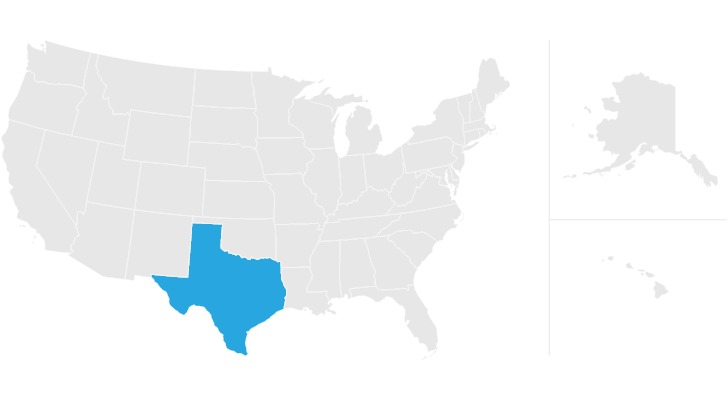
Texas does not impose a state inheritance or estate tax. Most of its laws surrounding inheritance are straightforward. However, if you die without a will, the distribution of your assets will be left up to the state’s intestate succession process.
Sorting an estate or inheritance can be complicated, but a financial advisor can help you create a plan for it. Speak with an advisor today.
Does Texas Have an Inheritance Tax or Estate Tax?
There are no inheritance or estate taxes in Texas. The state repealed the inheritance tax beginning on Sept. 1, 2015. That said, federal tax filing requirements can still apply after someone dies, including:
- Final individual federal income tax return: The decedent’s final federal income tax return is generally due by the regular filing deadline for the year following the individual’s death. Texas does not impose an individual state income tax.
- Federal estate/trust income tax return: An estate may need to file Form 1041 if it meets the federal filing requirements. The filing deadline depends on whether the estate uses a calendar or fiscal tax year.
- Federal estate tax return: Due nine months after the individual’s death, though an automatic six-month extension is available if asked for prior to the conclusion of the nine-month period. For a U.S. citizen or resident who dies in 2026, Form 706 is generally required when the gross estate plus adjusted taxable gifts and certain other amounts exceeds $15 million. An estate may also file Form 706 to elect portability of a deceased spouse’s unused exclusion even when the estate is below that threshold.
An estate that must file Form 1041 generally needs its own employer identification number (EIN). You can apply for one with the IRS online, by fax or by mail.
Dying With a Will in Texas
If you leave a testate will following your death, you’ve clearly and completely laid out in writing exactly what you want to be done with your estate. This includes the naming of an executor or personal representative for the estate, heirs to your property and legal guardians for children under 18.
It also means the creation of any testamentary trusts, which handle bequests to a beneficiary if the decedent doesn’t want that person to receive those assets until a specified time. A valid Texas will generally controls the distribution of probate assets covered by the will, although creditor claims, family protections, beneficiary designations and other laws can affect the final distribution.
Texas probate is not triggered simply because an estate exceeds $75,000. A will generally must be admitted to probate when court administration is needed to carry out its terms, subject to the estate’s assets and available alternatives. The court can appoint the executor named in the will to manage the estate, which can include protecting and distributing assets and handling debts and liabilities.
The $75,000 threshold applies instead to Texas’ small estate affidavit procedure for certain people who die without a will. When the statutory requirements are met, heirs may use a small estate affidavit after at least 30 days have passed since death. Among other requirements, the value of estate assets, excluding the homestead and exempt property, cannot exceed $75,000, and the estate must meet rules concerning its assets, liabilities and administration. The affidavit must still be filed with and approved by the appropriate court.
Texas generally requires a will to be offered for probate within four years after the testator’s death, although an exception may apply if the applicant was not in default for failing to file on time. An affidavit of heirship is a separate tool commonly used to establish evidence of heirs, particularly in connection with real property. It does not simply substitute for probate or automatically transfer every asset in an estate. As far as vehicles are concerned, a separate affidavit of heirship is available through the Texas Department of Motor Vehicles.
Dying Without a Will in Texas
Dying without a valid will leaves the distribution of assets up to the intestate succession process of the state of Texas. Even a decedent’s valid will can be considered intestate if it cannot disperse all estate property (possibly because of a beneficiary’s death or other extenuating circumstance) or if other parties have successfully contested the will.
Unfortunately, even the will of a decedent who passes away with the belief that things have been fully taken care of can have his or her will be considered invalid by the court after the fact.
In turn, an intestate estate, because it has little to no pre-specified direction, is inherited by some combination of the deceased’s spouse, children and/or relatives. To differentiate between your belongings and whom they should go to, Texas divides them into community property and separate property.
Community Property in Texas Inheritance Law
If you’re married, property acquired during your marriage is generally presumed to be community property. However, Texas law treats certain assets as separate property, including property owned before marriage and property acquired during marriage by gift, devise or inheritance. Certain personal injury recoveries can also be separate property.
Commingling separate and community funds can make ownership harder to prove, but depositing an inheritance or gift into a joint account does not automatically convert the property into community property if its separate character can still be traced.
Separate Property in Texas Inheritance Law
Separate property belongs solely to you and is split between personal and real property. Personal property consists of items that are not literally fixed to the ground, like cash, vehicles, investments and memorabilia. Land and anything fixed to it, such as a homestead, is real property.
Spouses in Texas Inheritance Law
In Texas, you don’t have to go the traditional marriage route to be considered married by the state. It recognizes common-law marriages and therefore will afford your common-law spouse inheritance rights even if there’s no marriage license attributed to your relationship. Texas calls this an informal marriage. It can generally be proved by a signed declaration or by evidence that the couple agreed to be married, lived together in Texas as spouses after the agreement and represented to others that they were married.
All community property will be left to your surviving spouse if all of your children are his or hers as well. More precisely, if all of the deceased spouse’s surviving children and other descendants are also children or descendants of the surviving spouse, the deceased spouse’s share of the community estate passes to the surviving spouse. But if one or more of your children are not from your surviving spouse, the deceased spouse’s one-half interest in the community estate generally passes to the deceased spouse’s children or other descendants. The surviving spouse keeps his or her own one-half interest.
In this situation, Texas deals with separate property differently. The state divides separate personal property between your spouse and your children, with two-thirds afforded to all the children and the leftover one-third going to the spouse. For separate real property, the surviving spouse receives a life estate in one-third of the land, while the children or their descendants receive the remainder interest in that one-third and inherit the other two-thirds outright.
The laws in Texas surrounding intestate estates for married individuals without children are much simpler. The surviving spouse automatically receives all community property. Separate personal property also goes completely to the surviving spouse, while separate real property is split down the middle between the surviving spouse and the deceased’s parents, siblings or siblings’ descendants, in that order.
Children in Texas Inheritance Law
Biological children of the decedent and his or her spouse hold some of the strongest inheritance rights to an intestate estate’s property. Texas law also generally treats an adopted child as the child of the adoptive parent or parents for intestate inheritance purposes, allowing the adopted child and the child’s descendants to inherit from and through the adoptive family.
If you’re not married, you won’t have any community property, as that’s reserved for married couples only. Therefore all of your property will be considered separately by the Texas courts. Intestate decedents in this situation who do have children, though, will leave all their separate property to their children.
Intestate Succession: Spouses and Children
| Inheritance Situation | Community Property | Separate Property |
|---|---|---|
| Spouse, but no children or descendants | Decedent’s share passes to spouse. | Spouse receives all separate personal property. For separate real property, the spouse receives one-half, while the other half passes to the decedent’s parents, siblings or descendants of siblings under Texas intestacy rules. If none of those relatives survive, the spouse inherits all separate real property. |
| Spouse and all children or descendants are also those of surviving spouse | Decedent’s share passes to spouse. | Spouse receives one-third of separate personal property, while children or other descendants receive two-thirds. For separate real property, the spouse receives a life estate in one-third, while the children or other descendants receive the remaining interests. |
| Spouse and at least one child or descendant is not also a descendant of surviving spouse | Decedent’s one-half interest in the community estate passes to the decedent’s children or other descendants. The surviving spouse retains the spouse’s own one-half interest. | Spouse receives one-third of separate personal property, while children or other descendants receive two-thirds. For separate real property, the spouse receives a life estate in one-third, while the children or other descendants receive the remaining interests. |
| Spouse and parents, but no descendants | Decedent’s share passes to spouse. | Spouse receives all separate personal property and one-half of separate real property. If both parents survive, each parent receives one-fourth of the separate real property. If only one parent survives and there are no siblings or descendants of siblings, that parent receives the other one-half. If siblings or their descendants also survive, the surviving parent receives one-fourth and the siblings or their descendants receive one-fourth. |
| Spouse and siblings or their descendants, but no parents or descendants | Decedent’s share passes to spouse. | Spouse receives all separate personal property and one-half of separate real property. The remaining one-half of the separate real property passes to the decedent’s siblings or their descendants. |
Stepchildren do not receive a part of your intestate estate as per the succession plan of Texas. Because the state doesn’t view anyone related to you solely through marriage as an automatic heir, a stepchild generally does not inherit through Texas intestacy rules unless the stepchild was legally adopted or otherwise qualifies as an heir under applicable law.
Children who were adopted or born following the execution of a parent’s will, otherwise known by Texas as pretermitted children, may have inheritance rights if they were born or adopted after the will was executed and were not mentioned, provided for in the will or otherwise provided for by the testator. The amount they receive depends on the circumstances and the provisions made for other children.
Children Born Outside Marriage and Inheritance Rights in Texas
Texas does not give a child fewer rights simply because the child’s parents were unmarried. For inheritance through a father, however, the parent-child relationship must satisfy applicable Texas law, such as through a presumption of parentage, a court determination, adoption or a valid acknowledgment of paternity. Once the parent-child relationship is established for inheritance purposes, the child can generally inherit from and through the parent under the state’s succession rules.
Unmarried Individuals Without Children in Texas Inheritance Law
The estates of legally single intestate decedents without surviving children go through a much more lengthy process of inheritance under Texas law. The succession rules generally move through parents, siblings and their descendants, then more distant paternal and maternal relatives.
| Inheritance Situation | Who Inherits | Additional Rule |
|---|---|---|
| Both parents survive | Each parent receives one-half of the estate. | Applies when there is no surviving spouse or descendant. |
| One parent survives and siblings or descendants of siblings survive | Surviving parent receives one-half; siblings or their descendants receive the other half. | Descendants of a deceased sibling may take that sibling’s share under Texas intestacy rules. |
| One parent survives and there are no siblings or descendants of siblings | Surviving parent receives the entire estate. | No sibling or descendant of a sibling survives to take a share. |
| No parents survive, but siblings or their descendants survive | Siblings and their descendants inherit the estate. | The estate is distributed among the sibling line according to Texas intestacy rules. |
| No parents, siblings or descendants of siblings survive | One-half generally passes through the paternal family and one-half through the maternal family. | Texas law then looks to grandparents and their descendants and, when necessary, more remote paternal and maternal kindred. |
Non-Probate Texas Inheritances
There are a number of financial accounts that won’t fit neatly into your estate. These require extra work to handle. Included in this are life insurance policies, retirement accounts like IRAs and 401(k)s, joint accounts and other beneficiary-based accounts. Assets with valid beneficiary designations generally pass to the named beneficiary outside the will. Joint accounts may also pass outside probate when they include an effective right of survivorship.
If you want a beneficiary-designated asset payable to your estate, you generally would need to name the estate as beneficiary, subject to the rules of the particular account or policy. Doing so can have tax and probate consequences, especially for retirement accounts, so it should not be done automatically.
Other Situations in Texas Inheritance Law
There are a few unique situations that may apply to you which is necessary to be aware of when it comes to Texas inheritance law. Here are some of the most common:
- Former spouse in will: If the deceased’s will includes a former spouse in it, Texas generally reads provisions in a will made before a divorce, annulment or declaration that the marriage is void as though the former spouse, and certain relatives of the former spouse, failed to survive the testator, unless the will expressly provides otherwise. If you still want a former spouse to inherit after divorce, review and update your estate documents.
- Someone who believes they were married: Questions involving an invalid marriage and a person who believed in good faith that the marriage was valid can involve Texas marital-property and equitable doctrines. A person in this situation should not be assumed to have exactly the same inheritance rights as a legally recognized surviving spouse in every case.
- Deathbed marriage: Texas law allows certain interested people to ask a court to void a marriage after a spouse dies when the marriage began no earlier than three years before death. The relevant issue is the deceased spouse’s mental capacity to consent to and understand the marriage when it occurred, not simply whether relatives believe the marriage was motivated by inheritance.
An application to void a qualifying marriage after death generally must be filed before the first anniversary of the decedent’s death. If the court voids the marriage under these rules, the other party is not treated as the decedent’s surviving spouse under Texas law.
Bottom Line
While Texas does not impose a state inheritance or estate tax, if you die without a will, your assets will be distributed through the state’s intestate succession process. Intestate succession laws affect only assets that are typically covered in a will, specifically assets that you own alone like real estate, stock market investments, businesses and other types of physical possessions.
Resources for Estate Planning
- If you are trying to sort out your estate or inheritance, a financial advisor can help you create a plan. Finding a financial advisor doesn’t have to be hard. SmartAsset’s free tool matches you with vetted financial advisors who serve your area, and you can have a free introductory call with your advisor matches to decide which one you feel is right for you. If you’re ready to find an advisor who can help you achieve your financial goals, get started now.
- If you have a sizable estate, estate taxes on either the state or federal level could be hefty. However, you can maximize your loved ones’ inheritances by gifting portions of your estate in advance to heirs or even setting up a trust.
- Inheritance isn’t usually considered income, but some inherited assets can have tax implications. Before you spend or invest your inheritance, read more inheritance taxes and exemptions.
Photo credit: ©iStock.com/courtneyk, ©iStock.com/Tiago_Fernandez