 Written by
 Edited by
 Edited by
 Reviewed by


A bigger paycheck can feel like a tax win, until filing season brings an unexpected bill. If you’re still thinking in terms of “withholding allowances,” the rules have changed: Today’s Form W-4 works differently, though an older form may still be on file with your employer. Here’s what happened to allowances, when you can claim an exemption from withholding and how changes in your finances or tax law could affect your paycheck.
A financial advisor may be able to help you create tax strategy based on your income and assets.
What You Should Know About Tax Withholding
Whenever you get paid, your employer removes, or withholds, a certain amount of money from your paycheck to cover taxes. So instead of paying one lump sum during tax season, you pay them gradually throughout the year. Employers in every state must withhold money for federal income taxes. Some states, cities, and other municipal governments also require income tax withholding.
Pay-as-you-go taxes also apply to pension income and other earnings such as gambling winnings, bonuses or commissions. If you’re a business owner, independent contractor or otherwise self-employed, it gets more complicated. You’ll need to set aside money for taxes yourself. You’ll also likely have to make quarterly estimated tax payments to cover what you owe.
Exactly how much your employer withholds will depends on two factor. It will base withholdings on how much money you make and how you fill out your W-4. While you used to be able to claim allowances, your withholding is now affected by your claimed dependents, if your spouse works, or if you have multiple jobs. You can also list deductions and other withholdings.
When you fill out your W-4, you are telling your employer how much to withhold from your pay. That’s why you need to fill out a new W-4 periodically. Typically it happens when you start a new job or experience a big life change like marriage or children.
What Were Tax Allowances?

A withholding allowance was like an exemption from having a certain amount of income tax kept back from your pay. So if you claimed an allowance, you believed that you qualified to have less taxes withheld. The W-4 communicated this to your employer and to the government. Should you have claimed zero allowances on your W-4, your employer would have withheld the maximum amount possible.
If you didn’t claim enough allowances, you overpaid your taxes throughout the year. This typically results with a tax refund come tax season. If you claimed too many allowances, you probably ended up owing the IRS money.
How Did You Determine How Many Allowances You Should Claim?
Allowances are no longer in effect on the current W-4 form, but when they were, the allowances were completely subjective. Many people would take an allowance for every single person that they were responsible for financially. So if you had yourself, a spouse and two children, you may claim four allowances.
Ultimately, the number of allowances depended on your tax strategy and whether you needed to take more tax out of your check or you needed more monthly income. It was a very personal choice with no exact answer.
How Do I Affect Withholding Now?
In 2020, the IRS redesigned the W-4 and removed the allowance system. 1 Although the change was intended to simplify the form, many filers find the new version more complex, and it now relies on different inputs to determine how much tax is withheld from each paycheck.
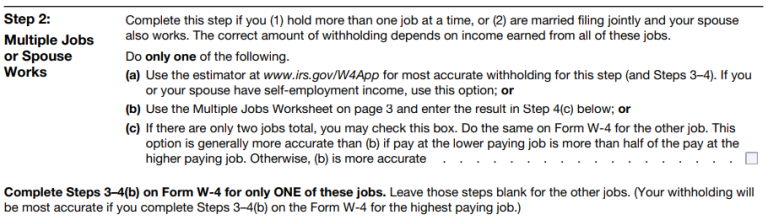
First, it’s important to fill out the multiple jobs or working spouse section using the worksheet on the third page of the W-4 to properly estimate your annual household income.
Second, the total number of dependents you claim also has a significant effect on your total withholding, so make sure you claim the correct number of dependents in Step 3.

Section 4 of the W-4 lets you account for other income, deductions and any additional federal income tax you want withheld from each paycheck. The 2026 form also includes a deductions worksheet that reflects deductions available under current federal tax law.

If you have a complex tax situation, it may be wise to work with a financial advisor who specializes in tax planning.
Claiming an Exemption From Withholding
Although employees no longer claim withholding “allowances” on Form W-4, you may be able to claim an exemption from federal income tax withholding. To qualify, you must have had no federal income tax liability for the previous year and expect to have none for the current year.
If you qualify, check the exemption box on Form W-4 and complete the required identification and signature sections. The exemption applies only to federal income tax withholding from your wages; Social Security and Medicare taxes will still be withheld. You may also still need to file a tax return.
An exemption is valid for one calendar year. To continue it, you must submit a new Form W-4 by February 15 of the next year. If your income or circumstances change and you expect to owe income tax, submit an updated form so you don’t end up with an unexpected tax bill or possible penalty.
Fine-Tuning Your Withholdings
You can claim deductions and extra withholding as you so desire. Taking an estimated or inaccurate amount would mean you overpay or underpay your taxes, but you can do it. You may want to claim different amounts to change the size of your paychecks. This is a personal choice that helps you plan your budget throughout the year.
At the same time, you can submit a new W-4 at any time during the year. So if you decide that you want larger or smaller paychecks, you can submit a new W-4 to your employer with a different number of deductions or withholdings.
When to Update Your W-4
Filing a W-4 isn’t a one-time event. Certain life changes and financial decisions can significantly impact your tax liability and paycheck. To keep your withholding accurate, consider updating your W-4 when any of the following events occur:
- Marriage or divorce
- Having or adopting a child
- A spouse starting or leaving a job
- Starting a second job or side income
- A significant change in income or bonuses
Buying a home and becoming eligible for itemized deductions - No longer being eligible to claim a dependent
Updating your W-4 after any of these changes can help avoid under- or over-withholding. This can reduce the risk of owing money to the IRS. You can submit a new W-4 to your employer at any time, and it usually takes effect within a few pay periods.
What If You Still Have an Old W-4 With Allowances?
Employees who gave an employer a valid W-4 before 2020 generally do not have to submit a new form solely because the IRS eliminated allowances from newer versions. Employers can continue calculating withholding using an older W-4 until the employee submits a replacement.
That means allowances can still affect some workers’ withholding even though employees can no longer claim allowances on a new W-4. For example, an employee who has remained with the same employer since 2019 and has never replaced the W-4 on file could still have withholding calculated using the allowances claimed on that form.
Once the employee submits a current W-4, however, withholding is calculated under the newer system. The employee provides filing status and, when applicable, information about multiple jobs, credits, other income, deductions and additional withholding instead of choosing a number of allowances.
How Tax Law Changes Affect Withholding in 2027
Tax law changes can affect how much of your paycheck is withheld, even if your salary stays the same. For 2027, the IRS increased the standard deduction to $16,600 for single filers and $33,200 for married couples filing jointly, and adjusted the income thresholds for federal tax brackets. Those changes can alter your estimated tax bill and the withholding calculated from your W-4.
Other provisions may affect your withholding if you qualify, including deductions for certain tip income, overtime compensation, passenger vehicle loan interest and charitable cash gifts. These deductions may lower taxable income, but they don’t apply to everyone. When you complete or update your W-4, account for any deductions or credits you expect to claim; the IRS Tax Withholding Estimator can help you determine whether to adjust your entries.
Estimate your tax liability based on your income and filing status using our calculator.
Bottom Line

Federal withholding allowances are no longer used on current W-4 forms, though a valid older form can remain in effect until you update it. You can adjust withholding with a new W-4, but claiming an exemption is limited to people who had no federal income tax liability last year and expect none this year. Review your form when your income, deductions or tax laws change.
Tax Filing Tips
- Some financial advisors are tax experts and can help you understand how taxes impact your financial plan. Finding a financial advisor doesn’t have to be hard. SmartAsset’s free tool matches you with vetted financial advisors who serve your area, and you can have a free introductory call with your advisor matches to decide which one you feel is right for you. If you’re ready to find an advisor who can help you achieve your financial goals, get started now.
- You’ll save time if you gather and organize all the supporting documents required to file your taxes. This means your W-2 or 1099s, student loan interest information, and a slew of other documents, depending on your financial situation. You might also use our tax calculator to get an estimate of what you’ll pay in income taxes.
Photo credit: ©iStock.com/vgajic, ©iStock.com/nandyphotos, IRS W-4 screenshots, ©iStock.com/Steve Debenport
Article Sources
All articles are reviewed and updated by SmartAsset’s fact-checkers for accuracy. Visit our Editorial Policy for more details on our overall journalistic standards.
- “FAQs on the 2020 Form W-4 | Internal Revenue Service.” Home, https://www.irs.gov/newsroom/faqs-on-the-2020-form-w-4. Accessed Sept. 24, 2026.