 Written by

Nearly one in five Americans age 65 and older continue working in some capacity, whether part-time or full-time, according to the Bureau of Labor Statistics. 1 This trend reflects a steady rise that dates back to 2000. Whether you need the extra income or not, you may also be considering working during retirement. Before doing so, it’s worth thinking through how earned income could affect your taxes, your Social Security benefits and your ability to continue saving. Weighing these trade-offs can help you decide whether working in retirement makes sense for your situation.
Benefits of Working in Retirement
Working in retirement can provide much more than a paycheck. The key benefits include:
- Income that supplements your retirement savings and boosts your quality of life
- The opportunity to continue saving for retirement in a 401(k) or Roth IRA
- Increased Social Security benefits if your job enables you to delay payments
- Employer-sponsored health insurance and retirement plans (with exceptions)
- Structure, stimulation and social interaction
It can also fulfill a sense of purpose or help you pursue a lifelong goal. You might not have time to do everything you wanted, such as mentoring or starting your own business, during your peak working years. You could also use this time to try a new role or completely different career path. No matter what your motivation, keeping it in mind can help you make the most of the experience.
Physical and Mental Challenges of Working in Retirement
Unretiring has its appeal, but there could be some things complicating your decision. Your health is one of the biggest considerations. Even if you want to work in retirement, an illness or injury could throw a wrench in your plans. And ongoing health conditions may require you to cut back on the number of hours you’re working or force you to step away completely.
On the other hand, work could raise your stress levels or put your health at risk. It will also cut into time you probably plan to spend with family or pursuing hobbies. Before you make your decision, you should weigh the benefits of working against any trade-offs you might be making.
How Working Longer Can Impact Social Security

Working in your golden years can give your household income a boost, which is helpful if you didn’t save for retirement as much as you would have liked. But it could impact other sources of income. Let’s start with Social Security, which you can begin taking at age 62. You can continue to draw benefits while working, but collecting a paycheck and Social Security at the same time could directly affect your benefit amount.
Here are the rules for working while collecting Social Security benefits:
- If you’re under your full retirement age for the entire year, $1 is deducted from your benefit payments for every $2 you earn above the annual limit. (The limit for 2026 is $24,480.)
- In the year you reach full retirement age, $1 in benefits is deducted for every $3 you earn above a different limit for each month before reaching full retirement age. (For 2026, the limit is $65,160.)
Your benefit will be recalculated when you reach full retirement age, but your total payment will be lower. The Social Security Administration will recalculate your benefit amount to exclude the months when your benefits were reduced or withheld because your earnings from work were over the allowed limit.
If your income from working is enough to cover your household expenses, delaying your Social Security benefits might be the better option. For each year you delay your benefits beyond your full retirement age, up to age 70, your benefit amount increases. If you’re able to wait until age 70, you can receive up to 132% of your benefit amount.
Additional Financial Implications
For tax-deferred retirement accounts like a 401(k) or traditional IRA, you have to start taking minimum distributions at age 73 (75 if you were born in 1960 or later). These plans also restrict contributions once you reach a certain age. However, you could continue to make contributions to a Roth 401(k) or Roth IRA as long as you have earned income for the year.
You may want to think about your earning potential while working in retirement, too. If you’re staying on with your current employer, you can probably expect to continue earning the same amount. However, if you retire and then return to the workforce, you may find it difficult to get a job with your former salary. At that point, you would be competing with workers who might be willing to fill an opening for less money.
How to Decide If Working in Retirement Is Worth It
Your decision ultimately depends on what you need financially and what you want your retirement to look like. Asking the right questions can help you get some clarity on whether continuing to work really makes sense.
- What’s your main reason for wanting to work in retirement?
- If your main motivation is financial, how much money will you need to earn from working?
- When do you plan to take Social Security benefits? Is there a chance your benefits may be reduced because you’re still working?
- If you’re married, when would your spouse plan to take Social Security?
- At what point would you begin taking withdrawals from your retirement accounts?
- How might those withdrawals (required minimum distributions or otherwise), coupled with what you earn from working, affect your tax liability?
- Would you be able to continue making retirement plan contributions while working?
- How long do you plan to work in retirement?
If you have a family, you may want to include them in the discussion. Your spouse, for instance, might be envisioning a retirement full of traveling or relaxing. At the very least, you will probably want the flexibility to spend more quality time with one another and your children. It can be helpful to get on the same page about what retirement means well before either of you reaches retirement age.
Finally, think about what you’ll gain from working in retirement beyond money. Working longer may be much more enjoyable for you if your mental and emotional needs are being met, versus just fattening up your bank account.
Bottom Line
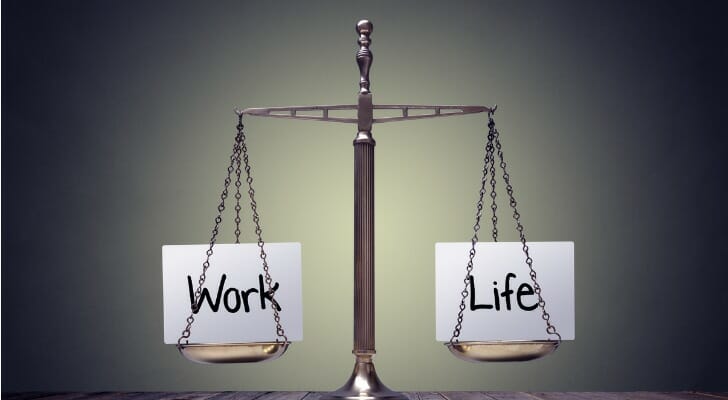
Working in retirement isn’t for everyone. It may sound good on paper, but can be a very different experience in practice. Consider your relationship with work and what your ideal retirement would be like. If you’re considering working in retirement purely for financial reasons, you might want to review your savings strategy. Taking advantage of employer match and catch-up contributions could help you avoid working in retirement if it isn’t right for you.
Tips for Working In Retirement
- Run the numbers to understand how much money you’ll need to cover your expenses in retirement. Then, look into what kind of job can help make your budget work. Estimate your Social Security benefits and decide when could be the right time to start taking them.
- A financial advisor can talk through the tax implications of taking Social Security payments or retirement plan withdrawals while working in retirement. Finding a financial advisor doesn’t have to be hard. SmartAsset’s free tool matches you with vetted financial advisors who serve your area, and you can have a free introductory call with your advisor matches to decide which one you feel is right for you. If you’re ready to find an advisor who can help you achieve your financial goals, get started now.
Photo credit: ©iStock.com/RgStudio, ©iStock.com/PeopleImages, ©iStock.com/BrianAJackson
Article Sources
All articles are reviewed and updated by SmartAsset’s fact-checkers for accuracy. Visit our Editorial Policy for more details on our overall journalistic standards.
- Wilkins, Megan. “Golden Years: Older Americans at Work and Play.” Beyond the Numbers, May 2025, https://www.bls.gov/opub/btn/volume-14/golden-years-older-americans-at-work-and-play.htm.