 Edited by
 Edited by

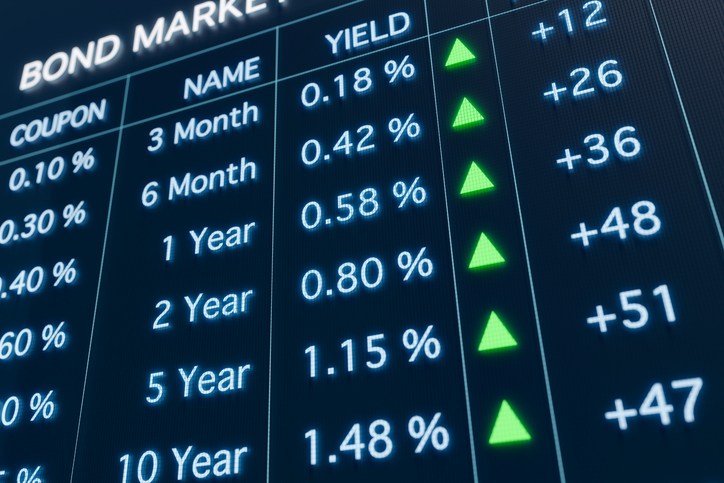
Debt investments are securities and accounts through which you lend money to a government, company or bank in exchange for interest and the return of your principal. They can provide income and balance stock holdings, but they differ in how they pay, how they’re taxed and how much risk they carry. Below, we’ll cover seven common types, their payment structures and the risks to weigh. As rates change over time, it’s a good idea to check before investing.
A financial advisor can answer your questions about debt investments and other securities as part of a comprehensive wealth management strategy.
How Debt Investments Work
When you buy a debt investment, you lend money to a government, company or bank. The principal is the amount you lend, and the issuer agrees to pay interest under the investment’s terms and return the principal at maturity, assuming it can meet its obligations. The maturity date is when repayment is due. A bond’s coupon is its stated interest rate, while its yield reflects the return based on its price, payments and, in some cases, how long you hold it.
Credit ratings assess an issuer’s ability to repay, though they can’t guarantee payment. Some debt investments pay fixed interest, others have rates that change, and Treasury bills typically sell at a discount and pay their full face value at maturity. Bond prices generally move in the opposite direction from market interest rates: when rates rise, existing fixed-rate bonds tend to fall in value.
7 Types of Debt Investments
The issuer, payment terms and risks vary widely. Terms for individual bonds are set in their offering documents; fund holdings and distributions can change. Treasury securities are issued by the U.S. government, while municipal bonds are issued by states, cities and other public entities. CDs are bank deposits, and FDIC coverage applies up to $250,000 per depositor, per insured bank, per ownership category.
| Type | Issuer | How It Pays | Typical Term | Federal Tax Treatment | Main Risk |
|---|---|---|---|---|---|
| Treasury securities | U.S. Treasury | Bills pay the difference between purchase price and face value; notes and bonds pay interest | Bills: up to 1 year Notes: 2–10 years Bonds: 20 or 30 years | Generally federally taxable; exempt from state and local income taxes | Interest-rate risk if sold before maturity |
| Municipal bonds | States, cities and public entities | Often fixed interest, paid periodically | Varies; short- to long-term | Interest often exempt from federal tax; state treatment varies | Issuer or project may fail to repay |
| Corporate bonds | Companies | Usually scheduled coupon payments, then principal at maturity | Varies, often several years | Interest generally federally taxable | Default or downgrade |
| Certificates of deposit (CDs) | Banks and credit unions | Interest paid or credited under account terms | Often months to several years | Interest generally federally taxable | Early-withdrawal penalties; inflation |
| Bond funds and ETFs | Fund holds a bond portfolio | Distributions from interest and other income; amount can change | No single maturity for most funds | Depends on underlying holdings and distributions | Market-price changes; no fixed principal repayment date |
| Mortgage-backed securities | Government agencies or private entities package home loans | Payments from homeowners’ principal and interest | Cash flows vary with mortgage payments | Generally taxable, depending on security and account | Prepayments and interest-rate changes |
| Private credit | Private funds or lenders finance companies | Interest, often with repayment terms set by loan | Varies; may be multi-year and illiquid | Depends on structure and income type | Default, limited liquidity and less public information |
Corporate bonds can offer higher yields than government debt, but the company’s financial health matters. Mortgage-backed securities pass through cash flows from pools of mortgages; when homeowners refinance or pay loans off early, investors may receive principal sooner than expected. Bond funds and ETFs make it easier to diversify, but their share prices fluctuate and their distributions aren’t guaranteed.
How Debt Investments Pay
A fixed-coupon bond pays interest based on its face value, even if its market price changes. Treasury bills work differently: investors may buy them below face value and receive the full amount at maturity. A CD credits interest according to its terms, while bond funds typically distribute income periodically; those payments can change as the portfolio and market rates change.
| Hypothetical Example | Calculation | Payment |
|---|---|---|
| $10,000 bond with a 5% annual coupon, paid twice a year | $10,000 × 5% ÷ 2 | $250 every six months |
| Treasury bill bought for $9,800 with $10,000 face value | $10,000 − $9,800 | $200 at maturity |
| CD with $10,000 at 4% for one year, simple interest | $10,000 × 4% | $400 in interest over one year |
Risks of Debt Investments for Your Portfolio
Debt investments can lose value or pay less than expected.
Interest-rate risk affects fixed-rate bonds, especially those with longer maturities. Credit risk is the chance that an issuer misses interest or principal payments.
Inflation can erode the buying power of fixed payments, while liquidity risk can make an investment hard to sell quickly at a fair price.
Callable bonds may be repaid early, forcing you to reinvest at lower rates. Meanwhile, mortgage-backed securities also carry prepayment risk because borrowers can repay mortgages early, changing when investors receive principal.
Duration offers a rough estimate of how sensitive a bond or fund’s price may be to interest-rate changes. For example, a fund with a six-year duration could lose about 6% of its value if rates rise by one percentage point, all else equal.
Keep in mind that this is an estimate, not a guarantee. Private credit can add risks because loans may be harder to value or sell and investors may receive less regular public information than they do for publicly traded bonds.
| Risk | Investments Most Affected | Ways to Manage It |
|---|---|---|
| Interest-rate risk | Long-term bonds and bond funds | Match maturities to goals; review duration |
| Credit and default risk | Corporate bonds, municipal bonds, private credit | Check credit quality and diversify issuers |
| Inflation risk | Fixed-rate bonds and CDs | Consider shorter maturities or inflation-linked securities |
| Liquidity risk | Private credit and thinly traded bonds | Keep near-term cash needs outside illiquid investments |
| Call and reinvestment risk | Callable corporate and municipal bonds | Review call terms and consider reinvestment options |
| Prepayment risk | Mortgage-backed securities | Understand how faster repayments may affect cash flows |
How to Choose Debt Investments for Your Portfolio
Start with when you’ll need the money, how much income you want, your tax bracket and how easily you may need to sell. Short-term Treasury bills or FDIC-insured CDs may fit a goal of preserving cash, while individual bonds or a diversified bond fund may help generate income. Eligible municipal bonds or municipal bond funds may appeal to investors seeking tax-exempt interest. Check CD balances against FDIC coverage limits and review the risks of each investment.
Individual bonds have defined payment terms and a maturity date, assuming the issuer pays as promised. Bond funds offer diversification and easier trading, but their value fluctuates and most don’t promise to return a set amount of principal on a particular date. A ladder of bonds, CDs or Treasuries spreads maturity dates over time. When an investment matures, you can use the principal or reinvest it at then-current rates, though laddering doesn’t eliminate market or credit risk.
Taxes can affect which yield is more attractive. For a hypothetical municipal bond yielding 3%, an investor in the 24% federal tax bracket can estimate its taxable-equivalent yield as 3% ÷ (1 − 0.24), or about 3.95%. This assumes the municipal interest is federally tax-exempt; state taxes, the alternative minimum tax and other details can change the comparison.
Bottom Line
Debt investments can provide income and balance stock holdings, but Treasury securities, municipal and corporate bonds, CDs, bond funds, mortgage-backed securities and private credit each carry different risks, tax rules and liquidity limits. Compare how an investment pays, when you may need the money and what could affect its value. A financial advisor can help choose debt investments that fit your goals and overall portfolio.
Tips for Investment Planning
- If you’re thinking about adding fixed-income investments to your portfolio, a financial advisor can help you align them with your financial goals and risk tolerance. Finding a financial advisor doesn’t have to be hard. SmartAsset’s free tool matches you with vetted financial advisors who serve your area, and you can have a free introductory call with your advisor matches to decide which one you feel is right for you. If you’re ready to find an advisor who can help you achieve your financial goals, get started now.
- If you have already decided to invest in high-yield savings accounts, here’s a roundup to help you get started.
Photo credit: ©iStock.com/Torsten Asmus, ©iStock.com/larryhw