 Written by
  Edited by
  Edited by
Reverse mortgage proceeds generally are not taxable because the IRS treats them as loan proceeds rather than income. As a result, the money you receive is not subject to federal income tax and generally does not count as income for Social Security, Medicare or most income-based benefits. However, some exceptions and related tax considerations apply: keeping proceeds in cash could affect eligibility for means-tested programs such as Medicaid, a forgiven loan balance may be taxable in some circumstances and interest paid when the loan is repaid may be deductible if the money was used for qualifying home improvements.
Before you take a reverse mortgage, it may be worth consulting a financial advisors to determine if this is a good fit for your financial needs.
What Is a Reverse Mortgage?
A reverse mortgage is a specialized home loan that allows older homeowners to borrow against their home equity without making regular principal and interest payments while they meet the loan requirements. Equity is defined as the home’s value, generally determined by sale price, bank assessment, or property tax assessment, less any amount you currently owe.
For example, say that you have a house valued at $500,000 on which you still owe $100,000. You would have $400,000 of equity in this house.
When you take a reverse mortgage, the lender gives you a loan based on this home equity. In exchange, they receive a claim on your house up to the value of the loan. The loan will also include an interest rate, a compounding schedule and, typically, origination fees. There are typically three types of reverse mortgages:
- Lump sum:You receive your available reverse mortgage proceeds in a single payment. The amount you can borrow depends on several factors, which may include your age, the home’s value, current interest rates and the type of reverse mortgage.
- Line of credit: Instead of receiving all available proceeds at once, you can draw money from a reverse mortgage line of credit as needed, up to the amount available under the loan. With an FHA Home Equity Conversion Mortgage (HECM) line of credit, the unused portion may grow over time, giving you access to additional borrowing capacity.
- Structured payments: Reverse mortgage proceeds are paid out in regular installments. Under a HECM, you can select term payments, which run for a set number of months, or tenure payments, which continue in equal monthly amounts for as long as at least one borrower keeps the home as their primary residence and stays current on the loan’s obligations.
HECMs are the most common type of reverse mortgage. They’re available to homeowners 62 and older who meet certain requirements, and they’re insured by the Federal Housing Administration (FHA), part of the U.S. Department of Housing and Urban Development (HUD). Proprietary reverse mortgages come from private lenders and may have different requirements.
How Reverse Mortgages Are Repaid
Unlike most loans, you do not make regular payments on a reverse mortgage. The debt will grow over time as the lender compounds interest against your current balance, typically on a monthly basis.
A reverse mortgage generally becomes due and payable when the last borrower dies, sells the home or no longer uses it as a principal residence.
The loan is secured by your house itself. The lender receives an interest in the home, in the same way that the lender has an interest in the house with a standard mortgage.
The homeowner retains title to the home while the reverse mortgage is outstanding. When the loan becomes due, the borrower or heirs may repay the balance, or the home may be sold and the proceeds used to repay the loan. If the debt is not repaid, the lender may ultimately foreclose on the property.
Reverse mortgage borrowers must continue paying property taxes and homeowners insurance and keep the home in good condition. Failure to meet these requirements can cause the loan to become due and potentially lead to foreclosure. Borrowers should understand these ongoing obligations and be cautious of reverse mortgage scams or misleading claims about loan terms and repayment requirements.
Reverse Mortgage Tax Implications
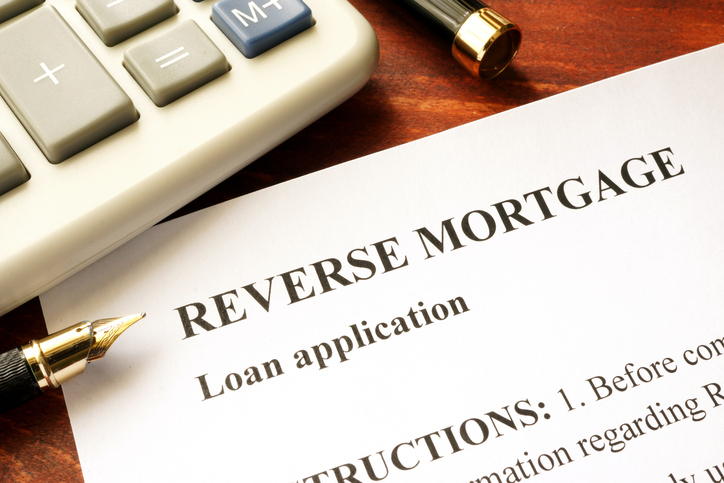
You do not pay taxes on the money you receive from a reverse mortgage. The IRS treats the money as loan proceeds rather than income, so receiving payments from a reverse mortgage does not create taxable income.
Because the money is considered loan proceeds, not income, receiving it generally won’t affect your Social Security retirement benefits or Medicare eligibility. Means-tested programs like Medicaid are a different story: holding onto the proceeds as cash or another countable asset could affect your eligibility. Because Medicaid rules vary by state and program, it’s worth reviewing the specifics before taking out a reverse mortgage if you receive these benefits.
Interest that accrues on a reverse mortgage generally cannot be deducted until it is actually paid. Once paid, some or all of the interest may qualify for the home mortgage interest deduction if the borrower itemizes deductions, used the applicable loan proceeds to buy, build or substantially improve the home securing the loan and meets the IRS’s other requirements.
As a result, borrowers who use reverse mortgage proceeds for everyday living expenses generally cannot deduct the interest attributable to those funds as home mortgage interest.
Bottom Line

Reverse mortgage proceeds generally are not taxable because the IRS treats them as loan proceeds rather than income. Interest that accrues on the loan generally is not deductible until it is paid, and even then, the deduction is subject to IRS rules governing home mortgage interest. Reverse mortgage proceeds also could affect eligibility for means-tested programs such as Medicaid if the money is retained as a countable asset.
Retirement Cash Management Tips
- Managing your investments while in retirement is just as important as the investments that lead up to this phase of life. Here are some ways to approach your portfolio once you’ve begun to rely on it.
- A financial advisor can help you build a comprehensive retirement plan. Finding a financial advisor doesn’t have to be hard. SmartAsset’s free tool matches you with up to three vetted financial advisors who serve your area, and you can have a free introductory call with your advisor matches to decide which one you feel is right for you. If you’re ready to find an advisor who can help you achieve your financial goals, get started now.
Photo credit: ©iStock.com/fstop123, ©iStock.com/designer491, ©iStock.com/shapecharge