 Written by

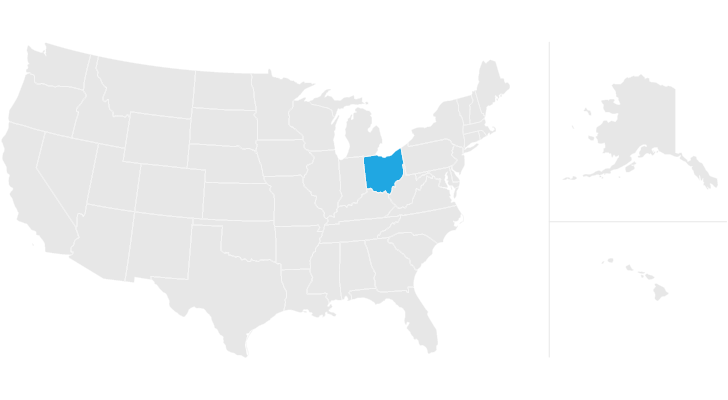
With no estate or inheritance taxes, Ohio is a hands-off state in terms of the allocation of your financial legacy. The rest of Ohio’s inheritance laws surrounding these topics are fairly typical, but the ins and outs of estate planning can still be rather complicated.
Are you in need of some help with your estate plan? Speak with a financial advisor today.
Does Ohio Have an Inheritance Tax or Estate Tax?
Like most U.S. states, Ohio has no estate tax or inheritance tax. This applies to both in-state residents and nonresidents who simply own property in the Buckeye State.
While it’s definitely welcome news for many that Ohio has no estate or inheritance taxes, that doesn’t leave you exempt from a number of other taxes you must file in the name of either the decedent or his or her estate. These include:
- Final individual federal and state income tax returns: Each is due by the tax day of the year following the individual’s death.
- Federal estate/trust income tax return: Due by April 15 of the year following the individual’s death.
- Federal estate tax return: Due nine months after the individual’s death, though an automatic six-month extension is available if requested prior to the conclusion of the nine-month period.
- This is required only of individual estates that exceed a gross asset and prior taxable gift value of $15 million in 2026.
Individual returns can be filed under the Social Security number of a decedent, but that’s not the case for the estate. To ensure that the estate becomes tax-eligible, register with the IRS for an employer identification number (EIN). This ID will represent the estate, and you can apply for it online, via mail or by fax.
Dying With a Will in Ohio
When you pass away with a valid will in place, it gives you control over how your assets and property are inherited by your family, friends or anyone else. Because of this, there aren’t many laws that are required to govern inheritances when there’s a will.
Decedents with a valid will who lived in Ohio or simply owned property in the state are considered testate. Therefore, a testate will is one that meets the following requirements:
- The will is typed or written by hand
- The will is signed by the decedent with no fewer than two witnesses
- Besides heirs, an estate executor is named
Because you obviously won’t be around to handle the inheritance of your property or manage anything related to your estate, the executor is an integral part of any will. This individual is not only responsible for distributing your property, but also for paying off your debts, liabilities and final expenses.
Dying Without a Will in Ohio
“Intestate,” the opposite of testate, is a legal term that describes an estate or individual who has died without a valid will, according to Ohio inheritance laws. While not an ideal set of circumstances, the state has built intestate succession statutes that are meant to get your property into the hands of various members of your family, depending on who survives you.
To do this, your property is divided into two categories: real property and personal property. Real property is real estate, such as land, a home or anything else that’s affixed to the ground. Personal property essentially covers everything else someone might own, like a car, furniture, valuables and family heirlooms.
An executor must be chosen to handle an estate since there’s no will that explicitly names one. An Ohio probate court usually chooses the person, typically someone who was close with the decedent or his or her family.
The Probate Process in Ohio Inheritance Law
Probate is the system by which the courts oversee an estate either to ensure the decedent’s wishes are met if there’s a testate will or to implement intestate succession laws if there isn’t a will. A significant chunk of estates that fall under Ohio inheritance laws will need to go through the probate process, though there are a couple alternatives that could get you out of it, at least partially:
- Summary release from the administration: Avoids probate entirely if either:
- The estate’s worth less than $40,000 and the surviving spouse is the sole heir
- The estate’s worth less than $5,000 and/or the decedent’s final expenses total no more than $5,000
- Release from the administration: Probate proceedings are sped up if either:
- The estate’s worth less than $35,000
- The estate’s worth less than $100,000 and the surviving spouse is the sole heir
Spouses in Ohio Inheritance Law
The surviving spouse is afforded 100% of the decedent’s estate if neither had children or all of their collective children were with each other, according to Ohio inheritance laws. Other than these two scenarios, how much of an estate a surviving spouse will inherit depends on who the children’s parents are.
If more than one of the decedent’s children were with another partner, and the spouse isn’t a legal parent to any of them, the spouse is given the first $20,000 of the estate, plus one-third of the balance. However, should the surviving spouse claim parenthood to at least one of the decedent’s children, his or her share will rise to the first $60,000 of the estate, plus one-third of the balance.
Decedents who had just one child outside of their marriage with the surviving spouse will again shift what the surviving spouse inherits. For this, the spouse is entitled to the first $20,000 of the estate, and half of whatever’s left over.
Children in Ohio Inheritance Law
Unmarried intestate decedents who have surviving children will have their entire estate handed off to them, per stirpes, according to Ohio inheritance laws. 1 This legal term refers to the distribution of an even share for each individual, leaving each child with the same value.
But if a person was married when he or she died intestate, how much their children inherit depends on whom the child was born to either the surviving spouse or another person. In situations where all the children of the decedent and surviving spouse were with each other, the spouse isleft the entire estate.
If just one child of the decedent has a parent other than the surviving spouse, the children only split what’s left over following the spouse’s take. When more than one child is from another relationship, though, the share of the spouse is slightly altered, and all children are again left with the balance.
Intestate Succession: Spouses & Children
| Inheritance Situation | Who Inherits Your Property |
|---|---|
| – If spouse, but no children | – Entire estate to the spouse |
| – If spouse, and children only from spouse and decedent | – Entire estate to the spouse |
| – If spouse and one child from the decedent and a person other than surviving spouse | – First $20,000 of the estate to the spouse– 1/2 of the estate’s balance to the spouse– Leftovers split evenly among children |
| – If spouse, and more than one child from a decedent and a person other than surviving spouse | 1. If the spouse is not the adoptive or biological parent of any of the children:– First $20,000 of the estate to the spouse– 1/3 of the estate’s balance to the spouse2. If the spouse is the adoptive or biological parent of at least one of the children:– First $60,000 of the estate to the spouse– 1/3 of the estate’s balance to the spouse3. In both cases, leftovers split evenly among children |
| – If children, but no spouse | – Estate split evenly among children |
The state of Ohio automatically considers a child born to your wife as a child of your marriage or domestic partnership. Children born outside of your marriage are only given rights to your intestate estate if your paternity is legally established in one of these five ways, according to Ohio inheritance laws:
- A paternity test proves you are the father
- You personally adopt the child
- You marry the mother after the child’s born
- You legally establish the parent-child relationship
- Your paternity is proven after you die
A legally adopted child receives the same size share of his or her parent’s intestate estate as any biological children the couple might have. A child conceived before the decedent’s death may inherit if born within 300 days after the death and living for at least 120 hours after birth. 2
Grandchildren hold a prime position in Ohio’s inheritance laws. However, they become valid heirs if, and only if, their parent (the decedent’s child) has already died.
In nearly every case, stepchildren in Ohio are not entitled to any part of their stepparent’s intestate estate. But if a decedent leaves surviving stepchildren and no spouse or blood relatives, they become legal intestate heirs. The same does not apply to foster children, though.
If you put your child up for adoption, he or she is not considered an heir to your estate, according to Ohio inheritance laws. This remains true unless he or she is ultimately not adopted, in which case the child is a legal heir.
Unmarried Individuals Without Children in Ohio Inheritance Law
In most cases of intestate succession, some combination of a decedent’s children and spouse will likely end up with his or her property. But if not, the following requirements dictate who the next logical heir is, according to Ohio inheritance laws:
Intestate Succession: Extended Family
| Inheritance Situation | Who Inherits Your Property |
|---|---|
| – If parents, but no spouse or children | – Entire estate to parents |
| – If no parents | – Estate split evenly among siblings |
| – If no siblings | – Estate split evenly among paternal/maternal grandparents |
| – If no grandparents | – Estate split evenly among paternal/maternal aunts and uncles |
| – If no aunts and uncles | – Estate split evenly among paternal/maternal cousins |
| – If no cousins | – Entire estate to nearest relative(s) |
| – If no more relatives | – Estate split evenly among stepchildren |
| – If no stepchildren | – Estate split evenly among children of stepchildren |
If after all this searching, no viable heirs can be found for your estate’s property, it will escheat to the state. This means that Ohio will seize control of your property and offer it to the school district in the county where the decedent resided or owned property.
Non-Probate Ohio Inheritances
Should the testate or intestate estate of a decedent need to go through probate under Ohio law, there are a few types of accounts and assets that will not be included in the proceedings, such as:
- Any property in a revocable trust
- Joint-tenancy real estate
- Beneficiary payouts for life insurance
- IRAs, 401(k)s and other retirement accounts
- Payable-on-death accounts
Other Situations in Ohio Inheritance Law
It’s become common for states to institute a survivorship law, requiring that an heir outlive the decedent for a certain amount of time before he or she becomes eligible for an inheritance. Ohio is included in this group and calls for a 120-hour survivorship period, which translates to five days.
Individuals who are somehow involved in your death, either via murder or conspiracy to kill you, are likely to be disinherited from your estate, according to Ohio inheritance laws. Only under very specific circumstances could this policy not be upheld.
Under intestate succession law, whatever a full-blooded sibling or other relative is eligible to receive from your estate, his or her half-blooded counterpart is entitled to an equal degree.
Relatives that would’ve been an heir had they been alive when you died retain that right to inheritance if they were conceived, but not yet born, prior to your death.
Ohio heirs that are in the U.S. illegally or are not yet official citizens will still be able to inherit as if they currently had full citizenship.
How a Financial Advisor Can Help With Estate Planning in Ohio
Ohio has no estate or inheritance tax, but that does not eliminate the need for planning. A financial advisor working alongside an estate attorney can help you navigate Ohio’s probate alternatives, intestate succession rules and federal estate tax exposure.
Determining Whether Your Estate Qualifies for Ohio’s Probate Alternatives
- What an advisor can do: Review your estate’s value and structure to help determine whether it qualifies for summary release from administration or release from administration, and explain the practical time and cost savings of each compared to full probate.
- Example: A widow in Columbus has an estate worth $32,000 and is the sole heir of her late husband’s property. An advisor confirms the estate falls under the $40,000 threshold for summary release from administration, allowing the family to avoid probate entirely rather than going through a lengthier court process.
Structuring Assets to Avoid Probate Entirely
- What an advisor can do: Help you set up a revocable trust, payable-on-death accounts, joint tenancy or beneficiary designations on retirement accounts and life insurance so key assets pass directly to heirs without going through Ohio’s probate system.
- Example: A retiree in Cleveland wants to leave a $150,000 brokerage account to her two adult children without subjecting them to probate. An advisor sets up a transfer-on-death designation on the account, ensuring the funds pass directly to her children outside of probate.
Planning for the Federal Estate Tax Threshold
- What an advisor can do: Since Ohio has no state estate tax but federal rules apply to estates above $15 million in 2026, an advisor can track your asset growth over time and flag when your estate is approaching that federal threshold even though it falls outside Ohio’s own tax system.
- Example: A business owner in Cincinnati has a current estate worth $11.5 million. An advisor projects that continued business growth could push the estate above the federal exemption within several years and begins discussing lifetime gifting strategies to manage that future federal exposure.
Helping Blended Families Plan Around Ohio’s Intestate Rules
- What an advisor can do: Explain how Ohio’s intestate succession laws treat children from outside a current marriage differently than children shared with a surviving spouse, and help blended families create a will or trust that reflects their actual wishes rather than defaulting to the state’s formula.
- Example: A father in Toledo has two children from a previous marriage and is remarried with no children from the current marriage. Without a will, Ohio’s intestate rules would give his current spouse the first $20,000 plus one-third of the remaining estate, with his children splitting the rest. An advisor helps him work with an attorney to draft a will that distributes assets according to his actual intentions instead.
Coordinating Retirement Account Beneficiary Designations
- What an advisor can do: Review beneficiary designations on IRAs, 401(k)s and other retirement accounts to confirm they reflect current wishes, since these accounts pass outside of probate based on the designation alone, regardless of what a will says.
- Example: A retiree in Dayton updated his will after a divorce but never changed the beneficiary designation on his 401(k), which still lists his ex-spouse. An advisor catches the outdated designation during a routine review and helps him update it so the account passes to his intended beneficiary rather than the person named years earlier.
Bottom Line

While Ohio does not impose a state inheritance or estate tax, if you die without a will, your assets will be distributed through the state’s intestate succession process. Intestate succession laws affect only assets typically covered in a will, specifically, assets owned solely in the decedent’s name that do not pass by beneficiary designation, transfer-on-death designation, joint ownership or trust.
Resources for Estate Planning
- Handling the intricacies of inheriting money from the estate of a loved one who has passed away can be difficult, but a financial advisor could help. Finding an advisor doesn’t have to be hard. SmartAsset’s free tool matches you with financial advisors who serve your area, and you can interview your advisor matches at no cost to decide which one is right for you. If you’re ready to find an advisor who can help you achieve your financial goals, get started now.
- Estate taxes on either the state or federal level could be hefty. But you can maximize your loved ones’ inheritances by gifting portions of your estate in advance to heirs or even setting up a trust.
- Some inherited assets can have tax implications. Before you spend or invest your inheritance, read more about inheritance taxes and exemptions.
Photo credit: ©iStock.com/vgajic, ©iStock.com/aceshot
Article Sources
All articles are reviewed and updated by SmartAsset’s fact-checkers for accuracy. Visit our Editorial Policy for more details on our overall journalistic standards.
- “Section 2105.06 – Ohio Revised Code | Ohio Laws.” Ohio Laws, https://codes.ohio.gov/ohio-revised-code/section-2105.06. Accessed July 10, 2026.
- “Section 2105.14 – Ohio Revised Code | Ohio Laws.” Ohio Laws, https://codes.ohio.gov/ohio-revised-code/section-2105.14. Accessed July 10, 2026.