 Written by
  Edited by
An increase in government spending is one of the factors that economists say can drive inflation. Other factors include interest rates, monetary policy, supply chain disruptions and fluctuations in demand for goods and services. Inflation can be an important consideration for investing, saving and borrowing. Let’s examine how increased government spending can affect inflation.
Consulting with a financial advisor can provide you with valuable guidance during inflationary periods.
Inflation Basics
The Federal Reserve defines inflation as “the increase in prices for many goods and services over time.” 1 Investors, businesses, consumers, economists and government policymakers all follow inflation closely. High inflation can cause an investment to produce a negative return after accounting for a dollar’s reduced purchasing power. Inflation affects consumers by making it more expensive to purchase goods and services. Businesses are impacted when they have to pay more for workers, supplies and materials.
How Inflation Is Measured
One of the most widely used measures of inflation is the Consumer Price Index for All Urban Consumers (CPI-U). This gauges the average cost in urban areas for a basket of more than 200 different items, ranging from food and housing to leisure activities and healthcare. Inflation is expressed as the percentage change in a measure such as the CPI over a period of time.
Over the last century, inflation in the U.S. has averaged just over 3% per year. This means a basket of goods costing $100 would cost about $103 a year later. Inflation spiked as high as nearly 24% in 1920.
Inflation’s Role in the Economy
Although signs of surging inflation often produce stock market downturns, inflation is not always bad. Some inflation is regarded as a sign of a healthy, growing economy. The Federal Reserve Bank manages monetary policy so as to produce inflation of 2% annually. It does this by purchasing securities and influencing interest rates.
After many years of relatively subdued inflation, the CPI began rising sharply in 2021 as the economy emerged from the COVID-19 shutdowns. A combination of supply-chain disruptions, strong consumer demand, fiscal stimulus and labor shortages contributed to rapid price increases across categories such as energy, vehicles and food.
By June 2022, prices were 9.1% higher than a year earlier. This was the most dramatic 12-month increase since 1981. Inflation remained elevated through much of 2022 before gradually easing in 2023 and 2024 as supply chains normalized and the Federal Reserve raised interest rates to cool demand.
Causes of Inflation
Inflation’s sharp rise in 2022 followed several rounds of substantial federal relief measures passed during the pandemic. Congress first approved the Coronavirus Aid, Relief, and Economic Security (CARES) Act in March 2020, which delivered direct cash payments, enhanced unemployment benefits and financial assistance for businesses, as well as state and local governments. Lawmakers later enacted additional stimulus programs, including the $1.9 trillion American Rescue Plan of 2021 that issued $1,400 payments to eligible individuals and extended various forms of government and unemployment support.
Debate Over Government Spending
The fact that levels of inflation not seen in decades came after historic amounts of government assistance has focused attention on the role that government spending plays in producing inflation. Economists hold mixed views on this question.
Some studies of the historical record suggest that government spending has no effect on inflation. 2 Others find that it has some impact on inflation but is likely only partially responsible for the post-pandemic inflation spike. One study, for instance, suggested that government spending had contributed 3% of the increase in inflation. 3
Economists also have not agreed on the mechanism by which increased government spending boosts inflation. Some suggest this happens because bond buyers, witnessing increases in federal government borrowing, lose faith in the government’s ability to repay its debts. A more conventional explanation is that when consumers and businesses have more money, as they did following the COVID-related stimulus spending, they buy more, which prompts businesses to raise prices to manage demand.
Demand, Supply and Price Pressures
Inflation’s root cause is demand outstripping supply. Many factors go into either increasing demand or reducing supply. For instance, when interest rates are lower, businesses and consumers find it easier and cheaper to borrow, which can spur increased demand. From the other direction, when supplies shrink significantly even though demand stays constant, as is particularly often the case with oil, inflation can also occur.
Many other factors can also influence the inflation trend. They include interest rate fluctuations, labor market changes, alterations in supplies of key commodities and more. The inflation run that began in 2021 was powerfully affected by a sudden rebound in depressed consumer demand as the pandemic eased, coupled with shortages of many items brought about by global supply chain disruptions.
This was particularly notable in the energy sector, where many oil firms went bankrupt as global demand collapsed in 2020. Surviving companies ceased exploration and drilling, and capped wells. Refineries reduced capacity, sometimes permanently. Then, when people began driving and flying again and global trade picked up, prices for gasoline and fuel oil shot up.
Similar dynamics affected semiconductors, which caused new automobiles to be in short supply as well. Then the Ukraine conflict that began in February 2022 resulted in widespread boycotts of Russian oil and gas, which extended the worldwide shortage of petroleum. Other countries with economies similar to the United States have also experienced significant although somewhat more moderate inflation, including those that spent far less on pandemic-related stimulus.
Bottom Line
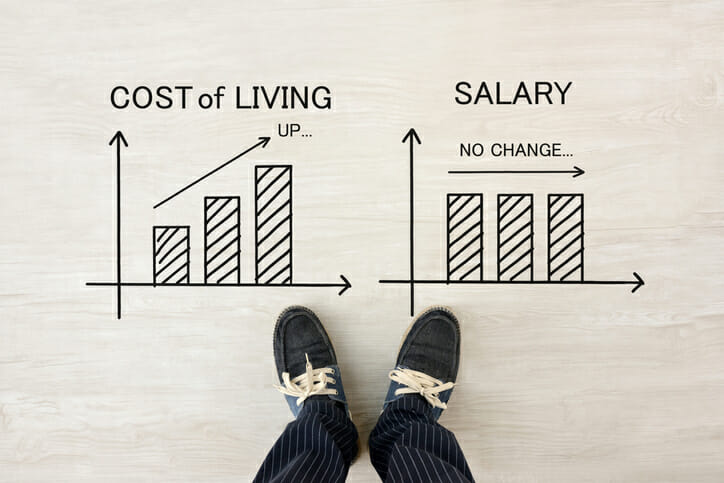
Government spending is one factor that may cause prices to rise and produce inflation. Massive U.S. stimulus payments to counteract the economic downturn of the pandemic were followed by near-historic spikes in inflation, suggesting that the multi-trillion-dollar injection of money into the economy was largely responsible for the price hikes. However, many other elements, including supply chain disruptions, a release (post-COVID) in pent-up demand and oil supply interruptions caused by boycotts of Russian oil and gas, also played major roles.
Tips for Inflation
- Financial advisors can help investors understand inflation’s causes and how to respond when it spikes. Finding a financial advisor doesn’t have to be hard. SmartAsset’s free tool matches you with financial advisors who serve your area, and you can interview your advisor matches at no cost to decide which one is right for you. If you’re ready to find an advisor who can help you achieve your financial goals, get started now.
- Use SmartAsset’s free online inflation calculator to understand exactly how inflation will affect your retirement savings over time.
Photo credit:©iStock/coldsnowstorm, ©iStock/SolStock, ©iStock/takasuu
Article Sources
All articles are reviewed and updated by SmartAsset’s fact-checkers for accuracy. Visit our Editorial Policy for more details on our overall journalistic standards.
- “What Is Inflation, and How Does the Federal Reserve Evaluate Changes in the Rate of Inflation?” Board of Governors of the Federal Reserve System, 22 Aug. 2025, https://www.federalreserve.gov/faqs/economy_14419.htm.
- Dupor, Bill. “How Does Government Spending Affect Inflation?” On the Economy Blog Ho, 10 May 2016, https://www.stlouisfed.org/on-the-economy/2016/may/how-does-government-spending-affect-inflation.
- Jordà, Òscar, et al. Why Is U.S. Inflation Higher than in Other Countries? Federal Reserve Bank of San Francisco, 28 Mar. 2022, https://www.frbsf.org/research-and-insights/publications/economic-letter/2022/03/why-is-us-inflation-higher-than-in-other-countries/.