 Written by
  Edited by

North Carolina no longer has a state estate tax, but that does not mean every estate is automatically free from tax. Large estates may still be subject to the federal estate tax, while other issues such as probate, inheritance planning and asset transfers can affect how wealth passes to heirs. Understanding the current rules can help North Carolina residents see when estate taxes may apply and where advance planning could make a difference.
Consider working with a financial advisor who can help you prepare for your individual long-term estate planning needs.
Does North Carolina Have an Estate Tax?
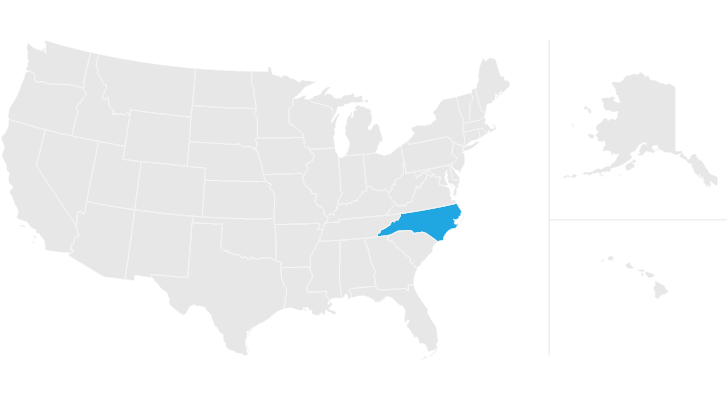
North Carolina is one of 38 states with no estate tax. Prior to 2013, the state did have an estate tax but it was repealed in July 2013. The repeal retroactively applied to all deaths from January 2013 onward.
What Is the Estate Tax?
An estate tax is a tax imposed on the transfer of a person’s property after death. Unlike an inheritance tax, which is generally paid by individual beneficiaries who receive property, an estate tax is paid by the estate itself before assets are distributed to heirs. The federal estate tax applies only to estates that exceed a relatively high exemption threshold.
For federal estate tax purposes, the gross estate can include real estate, cash, stocks, bonds, business interests, certain life insurance proceeds, annuities and other property the deceased person owned or had an interest in. The taxable estate is then calculated after subtracting allowable deductions, which can include debts, estate administration expenses, charitable transfers and qualifying property left to a surviving spouse.
For people who die in 2026, a federal estate tax return is generally required when the gross estate, combined with certain adjusted taxable gifts and other amounts, exceeds $15 million. Estates below that threshold generally do not owe federal estate tax, although an estate may still file Form 706 for other reasons, such as electing portability of a deceased spouse’s unused exemption.
North Carolina previously imposed its own estate tax, but the state repealed it for people dying on or after January 1, 2013. As a result, North Carolina residents generally do not face a separate state estate tax under current law, although sufficiently large estates can still be subject to the federal estate tax.
Because estate tax rules focus on the total value transferred at death rather than on each heir’s inheritance, determining potential liability usually begins with valuing the deceased person’s assets and reviewing applicable deductions, prior taxable gifts and available exemptions. For families with substantial estates, planning before death can also affect how much of the estate may ultimately be exposed to tax.
North Carolina Inheritance Tax and Gift Tax
There is no inheritance tax in North Carolina. The inheritance tax of another state may come into play for those living in North Carolina who inherit money. If you inherit property in Kentucky, for example, that state’s inheritance tax will apply even if you live in a different state.
There is no gift tax in North Carolina. The federal gift exemption is $19,000 per recipient for 2026, the same as for 2025. Any gifted amount over that threshold to a single person in a single year will count against your 2026 lifetime exemption of $15 million, up from $13.99 million in 2025.
Federal Estate Tax
While there isn’t an estate tax in North Carolina, the federal estate tax may still apply. The federal estate tax exemption is $15 million for deaths in 2026. The exemption is portable for spouses, meaning that with the right legal steps a couple can protect up to $30 million upon the death of both spouses.
A full chart of federal estate tax rates is below. The rates range from 18% to 40%.
Here’s an example of how to calculate your federal estate tax burden: Let’s say your estate is worth $17.13 million and you aren’t married. Subtracting the exemption of $15 million, leaves you with a taxable estate of $2.13 million. If you consult the table below, you’ll see that you are in the highest bracket. Your base tax payment on the first $1 million is $345,800. You’ll also pay 40% on the remaining $1.13 million, which comes to $452,000. That sum ($452,000), plus the base tax of $345,800, means your total federal estate tax burden is $797,800.
| Federal Estate Tax Rates | |||
|---|---|---|---|
| Taxable Estate* | Base Taxes Paid | Marginal Rate | Rate Threshold** |
| $1 – $10,000 | $0 | 18% | $1 |
| $10,000 – $20,000 | $1,800 | 20% | $10,000 |
| $20,000 – $40,000 | $3,800 | 22% | $20,000 |
| $40,000 – $60,000 | $8,200 | 24% | $40,000 |
| $60,000 – $80,000 | $13,000 | 26% | $60,000 |
| $80,000 – $100,000 | $18,200 | 28% | $80,000 |
| $100,000 – $150,000 | $23,800 | 30% | $100,000 |
| $150,000 – $250,000 | $38,800 | 32% | $150,000 |
| $250,000 – $500,000 | $70,800 | 34% | $250,000 |
| $500,000 – $750,000 | $155,800 | 37% | $500,000 |
| $750,000 – $1 million | $248,300 | 39% | $750,000 |
| Over $1 million | $345,800 | 40% | $1 million |
*The taxable estate is the total above the 2026 exemption of $15 million.
**The rate threshold is the point at which the marginal estate tax rate kicks in.
Overall North Carolina Tax Picture

North Carolina is moderately tax-friendly for retirees. Social Security is not taxed but other retirement income sources are fully taxed. North Carolina’s income tax is a flat rate of 4.25%. The state adopted a flat income tax rate in 2014. Prior to that, it had a progressive income tax.
The average effective property tax rate in North Carolina is 0.61%. The sales tax in the state ranges from 4.75% to 7.5%, depending on the county. You can use SmartAsset’s North Carolina paycheck calculator to see what your take home pay will be in the Tar Heel State.
Bottom Line
North Carolina does not currently impose its own estate tax, so residents are generally concerned only with the federal estate tax when an estate is large enough to exceed the federal exemption. Estate tax calculations can involve asset values, prior taxable gifts, deductions and portability between spouses, making advance planning especially important for high-net-worth families. Understanding how these rules apply can help clarify whether an estate may face tax and what planning strategies could reduce the amount ultimately owed.
Estate Planning Tips
- Estate planning can be complicated, so you may want to consider getting some professional help. Finding a financial advisor doesn’t have to be hard. SmartAsset’s free tool matches you with vetted financial advisors who serve your area, and you can have a free introductory call with your advisor matches to decide which one you feel is right for you. If you’re ready to find an advisor who can help you achieve your financial goals, get started now.
- When writing your will, make sure you pick the right person to be your executor. This person will be responsible for making sure everything gets distributed the way you want, so pick someone who is up to the task.
Photo credit: ©iStock.com/Bet_Noire, SmartAsset, ©iStock.com/AndreyKrav