 Written by
  Edited by
  Edited by

There is no estate tax in Colorado. Depending on the size of your estate, however, you may still owe estate tax to the federal government due to the federal estate tax. It is important to take into account both state-specific and federal tax implications when planning ahead for your estate.
If you’re dealing with estate planning, you may benefit from professional help. Try SmartAsset’s free financial advisor matching tool to find advisors who serve your area.
Colorado Estate Tax
There is no estate tax in Colorado. It is one of 38 states with no estate tax.
What Is the Estate Tax?
The estate tax is levied on an estate after a person has died, but before the money is passed on to their heirs. It is sometimes referred to as the “death tax.”
The estate tax is different from the inheritance tax. That tax is levied after the money has passed on to the heirs of the recently deceased.
Colorado Inheritance Tax and Gift Tax
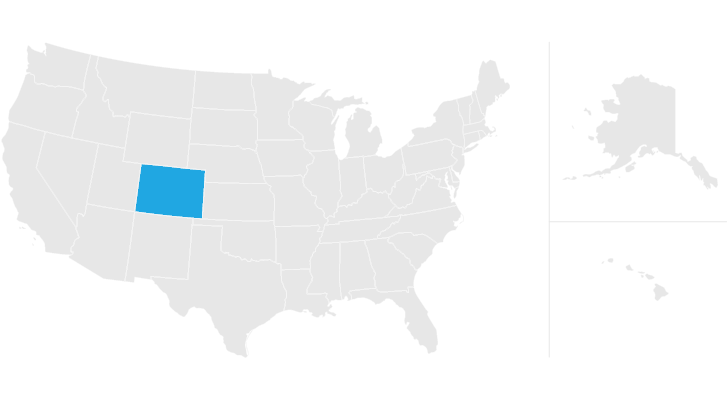
There is no inheritance tax in Colorado. Some states might charge an inheritance tax if the decedent dies in the state even if the heir lives elsewhere. In Kentucky, for instance, inheritance tax must be paid on any property in the state, even if the heir lives elsewhere.
Colorado also has no gift tax. The federal gift tax exemption is $19,000 per recipient for 2026. Giving more than $19,000 to one recipient in 2026 generally does not automatically create a gift tax bill. Instead, the donor generally must report the taxable portion of the gift, and it can reduce the donor’s available federal lifetime gift and estate tax exemption. The federal basic exclusion amount is $15 million in 2026.
Federal Estate Tax
Even though there is no estate tax in Colorado, you may still owe the federal estate tax. The 2026 exemption for that tax is $15 million, up from $13.99 million in 2025. This tax is portable for married couples. That means that if the right legal steps are taken, a married couple can protect up to $30 million when both spouses die.
If an estate tax exceeds that amount, the top federal tax rate is 40%. A full chart of federal estate tax rates is below.
Here’s an example of how it works: Let’s consider an estate worth $16.94 million that belongs to an unmarried individual. To determine the total estate tax burden, you’ll first need to subtract the $15 million exemption, leaving a taxable estate of $1.94 million. The first $1 million has a base tax payment of $345,800. An additional 40% is owed on the remaining $940,000 million, which totals $376,000. Add that figure to the base rate and you’ll get the total estate tax burden for this estate, which is $721,800.
Federal Estate Tax Rates
| Taxable Estate* | Base Taxes Paid | Marginal Rate | Rate Threshold** |
|---|---|---|---|
| $1 – $10,000 | $0 | 18% | $1 |
| $10,001 – $20,000 | $1,800 | 20% | $10,000 |
| $20,001 – $40,000 | $3,800 | 22% | $20,000 |
| $40,001 – $60,000 | $8,200 | 24% | $40,000 |
| $60,001 – $80,000 | $13,000 | 26% | $60,000 |
| $80,001 – $100,000 | $18,200 | 28% | $80,000 |
| $100,001 – $150,000 | $23,800 | 30% | $100,000 |
| $150,001 – $250,000 | $38,800 | 32% | $150,000 |
| $250,001 – $500,000 | $70,800 | 34% | $250,000 |
| $500,001 – $750,000 | $155,800 | 37% | $500,000 |
| $750,001 – $1 million | $248,300 | 39% | $750,000 |
| Over $1 million | $345,800 | 40% | $1 million |
*The taxable estate is the total above the 2026 federal exemption of $15 million.
**The rate threshold is the point at which the marginal estate tax rate kicks in.
When a Colorado Estate May Still Need a Federal Estate Tax Return
Colorado does not impose its own estate tax, but that does not remove federal filing obligations. If a person dies in 2026, an executor generally must submit Form 706 when the gross estate, adjusted taxable gifts and specific exemption together exceed the $15 million federal threshold.
Form 706 can also matter when an estate is worth less than that threshold. After the death of a married person, the executor may make a portability election. This allows the surviving spouse to later use any available deceased spousal unused exclusion (DSUE) amount. Making that election generally involves submitting the federal return on time even when the estate owes no federal estate tax.
Consider a married Colorado resident who dies in 2026 owning an $8 million estate with no taxable gifts that have reduced the available exemption. Based solely on those figures, the estate generally would not reach the $15 million filing threshold. The executor could nevertheless submit Form 706 and elect portability. Doing so could make the available DSUE amount accessible to the surviving spouse for federal gift and estate tax purposes. Whether that step provides a benefit will depend on factors such as the couple’s property, previous gifts and estate-planning arrangements.
Overall Colorado Tax Picture

Colorado is a fairly tax-friendly state for retirees. Social Security, retirement accounts and pensions are all partially taxed. Colorado’s individual income tax rate is 4.40% for the 2026 tax year. The state’s rate can vary by tax year, so taxpayers should confirm the rate that applies when filing a later return. Our Colorado paycheck calculator can help figure out what your take home pay in the Centennial State will be. Property taxes in Colorado are among the lowest in the country, with an average effective rate of just 0.50%.
Estate Planning Tips
- Planning an estate, in Colorado or elsewhere, isn’t easy. You might want to consider getting professional advice in the form of a financial advisor. Finding a financial advisor doesn’t have to be hard. SmartAsset’s free tool matches you with vetted financial advisors who serve your area, and you can have a free introductory call with your advisor matches to decide which one you feel is right for you. If you’re ready to find an advisor who can help you achieve your financial goals, get started now.
- Above all else, make sure you have a plan for your estate. Even if you’re young, think about what you want to have happen once you die. Hopefully it doesn’t get used for a long time, but having an estate plan can give you and your family peace of mind.
Photo credit: ©iStock.com/alexskopje, SmartAsset, ©iStock.com/pabradyphoto