 Edited by
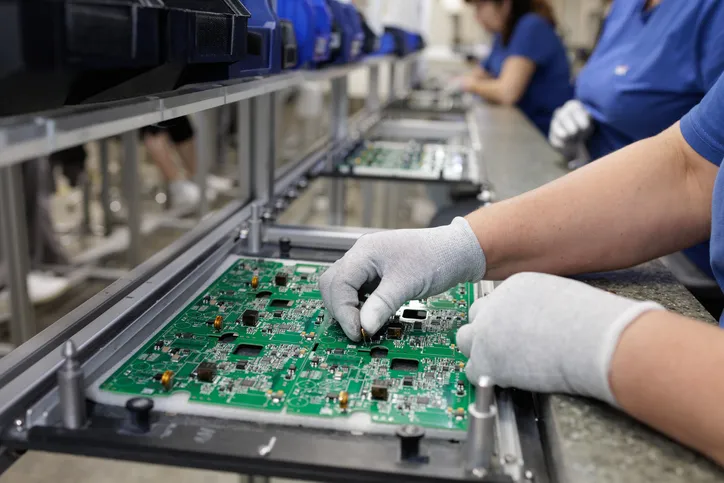
Two tech giants delivered big gains for investors 15 years ago. Apple built an ecosystem of devices and services around the iPhone. Nvidia moved from gaming chips into data centers and artificial intelligence (AI). A $2,000 stake in either company would have appreciated significantly, but one far outpaced the other.
What $2,000 Invested in Apple 15 Years Ago Is Worth Today
Apple closed at a split-adjusted $11.75 per share on August 3, 2011. 1 A $2,000 investment at that price would have purchased approximately 170.21 shares.
| Apple Investment | Amount |
|---|---|
| Initial investment | $2,000 |
| August 3, 2011 adjusted close price | $11.75 |
| Shares purchased | $2,000 ÷ $11.75 = 170.21 |
| August 3, 2026 adjusted close price | $303.42 2 |
| Current value | 170.21 × $303.42 = $51,645 |
Using the $303.42 split-adjusted close price from August 3, 2026, your initial $2,000 stake would be worth roughly $51,645 today, which is a gain of about $49,645 before taxes and trading costs.
Apple’s long-term growth was driven by the iPhone, which fueled demand for the company’s expanding lineup of devices and services. By late 2025, it reported more than 2.5 billion active devices worldwide, while iPhone and Services revenue reached record quarterly levels. 3 Together, these trends helped support Apple’s long-term shareholder returns over the 15-year period.
What $2,000 Invested in Nvidia 15 Years Ago Is Worth Today
Nvidia closed at a split-adjusted $0.34 per share on August 3, 2011. 4 A $2,000 stake would have purchased roughly 5,882.35 shares.
| Nvidia Investment | Amount |
|---|---|
| Initial investment | $2,000 |
| August 3, 2011 adjusted close price | $0.34 |
| Shares purchased | $2,000 ÷ $0.34 = 5,882.35 |
| August 3, 2026 adjusted close price | $206.64 5 |
| Current value | 5,882.35 × $206.64 = $1,215,529 |
Based on the $206.64 split-adjusted close price from August 3, 2026, your initial $2,000 position would be worth about $1.215 million today, which is a gain of roughly $1.213 million before taxes and transaction costs.
Nvidia’s path diverged sharply from Apple’s. Fifteen years ago, the company was primarily known for gaming graphics processors. It then pivoted its GPU architecture toward accelerated computing, cloud data centers and AI. The shift toward AI infrastructure became a major driver of the company’s growth, particularly as organizations increased spending on AI computing.
Note: Both Apple and Nvidia estimates use split-adjusted closing prices and assume fractional shares. They exclude dividends, taxes and trading costs. These figures represent a historical snapshot and do not reflect reinvested dividends or additional purchases. For a more precise estimate, a financial advisor can help you calculate actual investment gains or losses based on your specific purchase dates, holdings and taxes.
Why Nvidia Produced the Higher Return
While Apple spent the 15-year period expanding an already successful consumer platform, Nvidia started from a much smaller business and later became a leading supplier of chips powering AI infrastructure.
The return difference between both companies was not obvious in 2011. In fact, shareholders had to endure semiconductor cycles, changing demand and significant stock declines without knowing how important AI would become.
Comparing both financial investments can show one valuable lesson: bigger historic gains could come with greater volatility. Nvidia experienced significantly larger price swings than Apple during much of the period, meaning some investors may have found it more difficult to hold through market downturns.
Each investment reflects different risk profiles and tolerance levels. If you need help figuring out how much risk you should take on, a financial advisor can assess your situation to develop a specific allocation strategy.
Photo credit: ©iStock.com/Sergii Kolesnikov, ©iStock.com/tadamichi
Article Sources
All articles are reviewed and updated by SmartAsset’s fact-checkers for accuracy. Visit our Editorial Policy for more details on our overall journalistic standards.
- “Apple Inc. (AAPL) Historical Data.” Yahoo! Finance, https://finance.yahoo.com/quote/AAPL/history/?period1=1312243200&period2=1312416000. Accessed Aug. 6, 2026.
- “Apple Inc. (AAPL) Historical Data.” Yahoo! Finance, https://finance.yahoo.com/quote/AAPL/history/?period1=1785715200&period2=1785801600. Accessed Aug. 6, 2026
- “Apple Reports First Quarter Results.” Apple Newsroom, Jan. 29, 2026, https://www.apple.com/newsroom/2026/01/apple-reports-first-quarter-results/.
- “NVIDIA Corporation (NVDA) Historical Data.” Yahoo! Finance, https://finance.yahoo.com/quote/NVDA/history/?period1=1312243200&period2=1312416000. Accessed Aug. 6, 2026.
- “NVIDIA Corporation (NVDA) Historical Data.” Yahoo! Finance, https://finance.yahoo.com/quote/NVDA/history/?period1=1785715200&period2=1785801600. Accessed Aug. 6, 2026