 Edited by
  Edited by
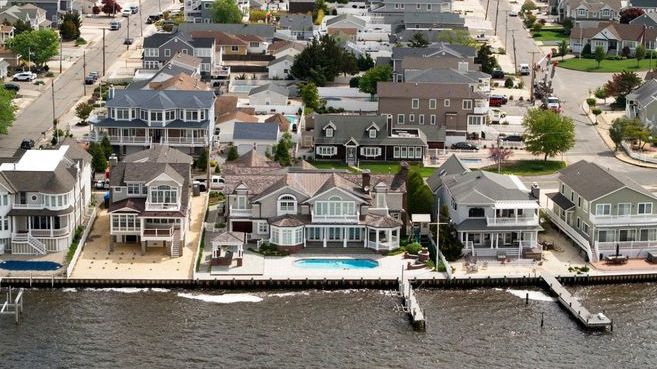
New Jersey imposes a mansion tax on real estate transactions exceeding $1 million. Applying to residential and certain commercial properties, this 1% levy adds a significant cost for high-value buyers. The purchaser typically pays the tax at closing, though exemptions and legal strategies may help reduce or eliminate the obligation. Buyers looking to avoid or minimize the New Jersey mansion tax often explore exemptions for specific property types, seeking ways to structure purchases to avoid the tax or to negotiate with sellers.
A financial advisor can help you make major financial decisions, like purchasing a home or retiring.
Understanding the NJ Mansion Tax
New Jersey introduced the mansion tax in 2004 to generate revenue from high-value real estate transactions.
The tax applies to residential and many commercial properties that sell for more than $1 million. Buyers normally pay the tax at closing, which is 1% of the purchase price. Unlike the state’s realty transfer fee that applies to a broader range of transactions, the mansion tax specifically targets luxury sales.
The tax applies to single-family homes and small multi-family properties with fewer than four units, including condos and co-ops. It also includes office buildings and other commercial properties.
Buyers must pay the tax directly to the county recording office at closing. Failure to do so can delay the recording of the deed.
Who Pays the NJ Mansion Tax?
While the legal obligation falls on the buyer, some sellers may agree to cover part or all of the tax as a negotiation tactic. This is especially likely in a buyer’s market. However, buyers should typically budget for this added tax as part of closing costs.
Sales involving government entities or qualified affordable housing programs may be exempt. There are other property types not covered by the mansion tax, as well:
- Vacant land
- Farms with no residences
- Industrial properties
- Churches
- Schools
- Properties owned by charities
Some types of transactions are also not covered by this tax. They include transfers between relatives, those resulting from bankruptcy or divorce and those stipulated in a formal will.
NJ Mansion Tax vs. Realty Transfer Fee
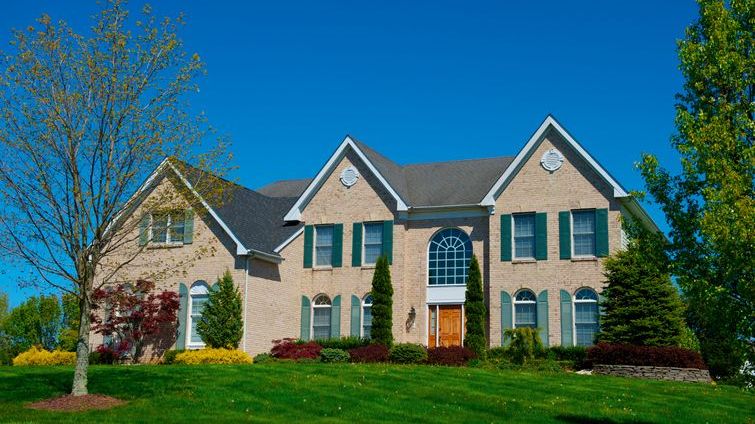
The NJ mansion tax and the realty transfer tax serve different roles in real estate transactions.
The mansion tax is a targeted surcharge to generate revenue from high-end sales on properties exceeding $1 million. Its threshold does not adjust for inflation or market trends. Therefore, more properties have become subject to the tax over time as home values have risen since its passage in 2004.
The realty transfer tax, on the other hand, applies to nearly all sales and follows a progressive rate structure that increases as the transaction amount rises. Unlike the mansion tax, which is a fixed percentage, the transfer tax includes exemptions and reduced rates for certain sellers, such as seniors and first-time homebuyers. While the buyer typically pays the 1% mansion tax, the seller generally covers the realty transfer fee.
Another key difference is how these taxes apply to commercial properties. While the mansion tax applies to mixed-use and commercial properties with residential components, the realty transfer tax generally applies to all real estate transfers.
Exemptions to the realty transfer tax are generally limited to those resulting from events like bankruptcy, divorce and the settling of an estate.
How to Avoid the NJ Mansion Tax
Avoiding the mansion tax in New Jersey requires careful transaction structuring, but options are limited.
The most straightforward way is to keep the purchase price at or below $1 million. If a property is priced slightly above this threshold, buyers and sellers may negotiate concessions, such as including furniture or other non-real estate assets in a separate bill of sale to bring the recorded price below the limit. However, artificially reducing the recorded price to evade the tax can violate state laws.
For sales of mixed-use properties, structuring the transaction to emphasize non-residential value may provide an exemption. If the residential portion is a small percentage of the total property, buyers may qualify for relief.
Certain government-related transactions, such as those involving affordable housing projects or nonprofit entities, may also be exempt.
NJ Mansion Tax vs. Other States
New Jersey’s mansion tax stands out for its strict $1 million threshold, which does not adjust for inflation or regional price differences.
This contrasts with states like New York. Here, the mansion tax starts at 1% for properties over $1 million but increases progressively for higher-value transactions.
In areas like Connecticut, 1 luxury real estate is taxed at higher rates, but the structure differs. It applies a graduated conveyance tax, reaching up to 2.25% on sales exceeding $2.5 million. Other states like Florida 2 do not have a statewide mansion tax, though high-value real estate sales may be subject to local transfer taxes.
Compared to these states, New Jersey’s tax is broad and applies uniformly to all qualifying transactions.
How the Mansion Tax Affects Buyers in Today’s Market
When New Jersey established the mansion tax in 2004, a $1 million home represented a genuine luxury purchase in most parts of the state.
That’s no longer true in many markets. Its fixed threshold has become a much broader burden than originally intended.
In areas like Montclair, Princeton and Ridgewood, median home prices have climbed steadily to the point where $1 million does not go as far. It buys a modest single-family home rather than anything that resembles a mansion.
A buyer purchasing a three-bedroom colonial in a suburb of New York City for $1.05 million pays the same 1% tax as someone buying a $4 million estate. The threshold doesn’t adjust for inflation, regional price differences or broader market appreciation. Therefore, its reach automatically expands as home values rise without requiring any legislative action.
For buyers near the cutoff, the tax creates a practical pricing distortion. A home listed at $1.05 million costs $10,500 in mansion tax alone, on top of other closing costs that typically run several percent of the purchase price. A comparable home at $995,000 triggers no mansion tax at all.
That $55,000 difference in list price can translate into a much smaller difference in total cost once taxes are factored in. This is why buyers and their agents pay close attention to where a property sits relative to the threshold.
Total New Jersey closing costs, including the mansion tax, can run between 2% and 5% of the purchase price. This includes several costs:
- Realty transfer fee paid by the seller
- Title insurance
- Attorney fees
- Prepaid expenses
- Recording fee
- Appraisal fee
The mansion tax adds a full percentage point on top of whatever the buyer is already paying. For a $1.2 million purchase, $12,000 is due at closing, which wouldn’t apply to a transaction just below $1 million.
What Buyers and Sellers Should Do Before Closing
The mansion tax doesn’t leave much room for surprises if the transaction is handled correctly from the start. However, first-time homebuyers may find themselves underprepared for both the cost and the logistics.
Prepare Payment
Payment is due at closing and goes directly to the county recording office with the deed. It cannot be financed through the mortgage, so the full amount must be available in the buyer’s closing funds.
A buyer who has carefully budgeted for a down payment and standard closing costs but hasn’t accounted for the mansion tax may face a shortfall at the table. Identifying whether the tax applies should happen early in the process, not in the final days before closing.
Check for an Exemption
Confirming whether an exemption applies is worth doing before closing day rather than assuming one does. Transactions involving government entities, qualified affordable housing programs or certain nonprofit organizations may be exempt.
However, the exemption documentation must be in order before the deed is recorded. Your real estate attorney should be able to confirm the exemption status and prepare the required paperwork well in advance.
Negotiate In Advance
The negotiation over who bears the cost is most productive when it occurs during the offer and contract stages rather than later on. In a buyer’s market, sellers sometimes agree to cover part or all of the mansion tax as a concession, either through a price reduction or a closing cost credit.
In a competitive market, that conversation is harder to have. Either way, both parties benefit from addressing it explicitly in the contract rather than leaving it as an assumption.
Hire an Attorney
A real estate attorney plays a central role in New Jersey transactions, and compliance with the mansion tax is one reason.
Beyond confirming the tax amount and exemption status, the attorney coordinates payment logistics, reviews the deed documentation and ensures the recording processes without delay.
Buyers who try to navigate a high-value New Jersey closing without legal representation take on more risk than the attorney’s fee is worth avoiding.
Bottom Line
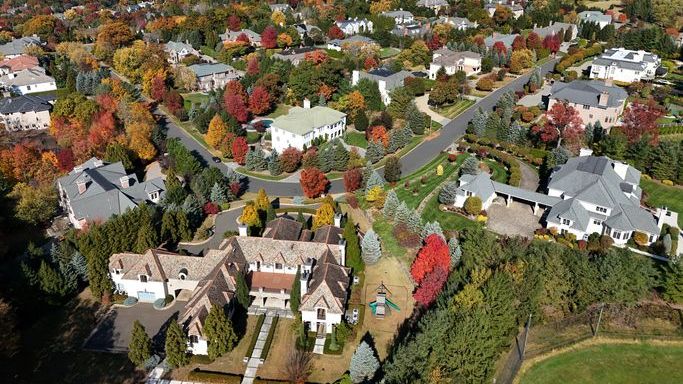
New Jersey’s 1% mansion tax on properties over $1 million adds to the cost of high-value property transactions. This affects buyers of residential and certain commercial real estate. While the tax applies broadly, some exemptions and structuring methods may provide relief in specific cases. Buyers and sellers in high-end real estate transactions should account for this tax when planning a purchase or sale, as avoiding it entirely is difficult without qualifying for specific exemptions or using alternative structures.
Tax Planning Tips
- Maximizing your use of tax-advantaged accounts can be a simple but effective tax strategy. Contributing to 401(k) plans, IRAs and health savings accounts (HSAs) can lower taxable income while allowing investments to grow tax-deferred or tax-free. Roth IRA conversions may also be beneficial if tax rates are expected to rise in the future.
- A financial advisor with tax expertise can be a valuable resource as you look for ways to save on taxes. Finding a financial advisor doesn’t have to be hard. SmartAsset’s free tool matches you with vetted financial advisors who serve your area, and you can have a free introductory call with your advisor matches to decide which one you feel is right for you. If you’re ready to find an advisor who can help you achieve your financial goals, get started now.
Photo credit: ©iStock.com/Johnrob, ©iStock.com/Johnrob, ©iStock.com/dolah
Article Sources
All articles are reviewed and updated by SmartAsset’s fact-checkers for accuracy. Visit our Editorial Policy for more details on our overall journalistic standards.
- “SN 2004-6.” CT.Gov – Connecticut’s Official State Website, https://portal.ct.gov/DRS/Publications/Special-Notices/2004/SN-2004-6. Accessed June 12, 2026.
- “Mansion Tax by State Luxury Guide | Own Luxury Homes®.” Own Luxury Homes, https://www.ownluxuryhomes.com/markets/mansion-transfer-tax/guide/mansion-tax-by-state-luxury-guide. Accessed June 12, 2026.