 Written by
  Edited by

I am 68 and claimed my husband’s Social Security when I first retired back in 2023 because when he died in 2022, his benefit was higher than my own. I returned back to work in February 2024 and retired fully in May 2025. Would I be able to claim higher Social Security benefits since I went back to work? If so, how would I proceed? -Sheila
Thanks for the question, Sheila. Yes, it is quite possible that you could claim a higher benefit now by switching to your own benefit. We need to clarify exactly how that could work given your situation as I think there is some potential for confusion here.
Social Security plays an integral role in the financial plans of most retirees. Work with a financial advisor to optimize your Social Security strategy.
Social Security Survivor Benefits
First, let’s review how Social Security survivor benefits work, and distinguish them from spousal benefits so that we make sure you are following the right rules.
A survivor benefit is one that a surviving spouse receives based on a deceased spouse’s earnings record. Generally, it is equal to the deceased spouse’s benefit they were collecting at their time of death.
A spousal benefit, on the other hand, is what you can collect based on a spouse’s earnings record while they are still alive. Generally, it is worth up to 50% of their full retirement benefit, although it may be lower based on when you claim.
(For questions about Social Security and other retirement planning topics, consider speaking with a financial advisor.)
Can Your Own Benefit Grow While Collecting a Survivor Benefit?
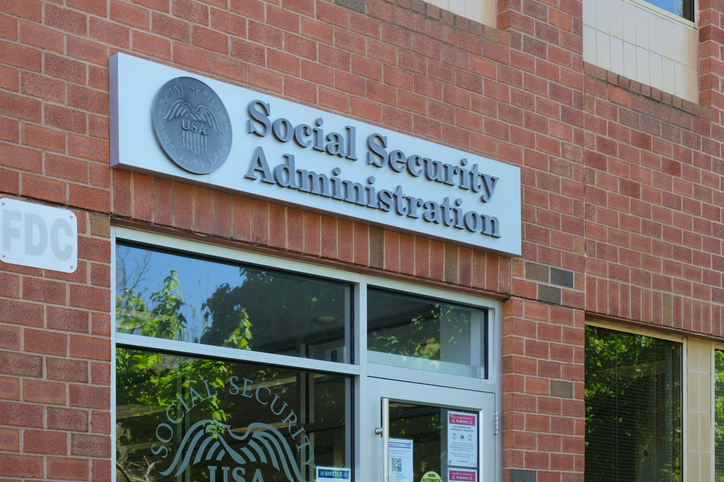
Yes, your own benefit can continue to grow while you collect a survivor benefit. However, we need to clarify how that happens, because there does seem to be some confusion about this topic. You may even hear or read about rules that simply do not apply to your situation.
So let’s set the record straight: Your benefit may continue to grow as you add to your own earnings record, and as a function of your increased filing age.
Wondering what your Social Security benefit could look like? Use SmartAsset’s Social Security Calculator to estimate your benefits and see how they could fit into your retirement income.
Your Own Work History
Social Security benefits are determined in part by historical earnings. The Social Security Administration uses the highest 35 years of covered earnings to calculate your average indexed monthly earnings or AIME.
- Your survivor benefit is based on your spouse’s earnings record.
- Your own benefit is based on your own earnings record.
If you earned more in any year since 2023 than you did in an earlier year, that higher earning year replaces one of your older, lower-earning years in the calculation, which increases your AIME.
For a simple example, assume that by 2023 you had worked for 33 years. Because Social Security uses 35 years in its calculation, two of those years would be counted as $0. Now suppose that in the prior two years you earned $68,000 and $71,000. Those earnings would replace the two zero-income years, increasing your AIME and, as a result, your Social Security benefit.
For an even simpler illustration of how the math works, consider that 3+3+0 averages to 2, but 3+3+3 averages to 3. (If you need additional help planning for Social Security or deciding which benefits to claim, work with a financial advisor.)
Your Filing Age
This is where misinformation often creeps in. You may hear that if you claim survivor benefits, your own retirement benefit stops growing because you are no longer earning delayed retirement credits. That isn’t correct. Even while collecting survivor benefits, your own retirement benefit can continue to increase as you age.
The same cannot be said about spousal benefits, though.
The strategy of claiming on a spouse’s record and then switching to your own later, used to be available but the Bipartisan Budget Act of 2015 ended it for spousal benefits. Now, if you claim a spousal benefit you will be “deemed” to have claimed on your own record, as well. If you claimed a spousal benefit at age 66, your own benefit at 68 would be calculated based on the appropriate deduction for filing at age 66.
But remember, spousal benefits and survivor benefits are not the same thing. This “deemed” filing does not apply to survivor benefits. If you started collecting survivor benefits at 66 but switched to your own benefit at 68, your own benefit is based on your filing age of 68.
(Work with a financial advisor who specializes in retirement planning if you need help navigating Social Security.)
Should You Switch from a Survivor Benefit to Your Own Benefit?
Whether or not you should switch depends on which benefit is higher. You can check your own benefit estimate online or by calling or visiting the local Social Security office.
Fortunately, the process for switching from a survivor benefit to your own retirement benefit is as simple as filling out a new application. Again, you can do this online or by visiting your local Social Security office.
Next Steps

If your own benefit is now larger due to higher historical earnings and an increased filing age, then it likely makes sense to switch. However, you don’t necessarily have to do it immediately. You can continue to collect survivor benefits while your own benefit accrues delayed filing credits all the way until you turn 70.
Ultimately, the right answer isn’t the same for everyone, so review your plan and consider your own circumstances before making your decision.
Social Security Planning Tips
- If you claim Social Security before reaching full retirement age and continue working, your benefits may be temporarily reduced if your earnings exceed annual limits. These withheld amounts are later credited back after you reach FRA.
- A financial advisor can help you evaluate your options, model different claiming strategies and integrate Social Security into a broader retirement plan. Finding a financial advisor doesn’t have to be hard. SmartAsset’s free tool matches you with vetted financial advisors who serve your area, and you can have a free introductory call with your advisor matches to decide which one you feel is right for you. If you’re ready to find an advisor who can help you achieve your financial goals, get started now.
Brandon Renfro, CFP®, is a SmartAsset financial planning columnist and answers reader questions on personal finance and tax topics. Got a question you’d like answered? Email AskAnAdvisor@smartasset.com and your question may be answered in a future column.
Please note that Brandon is not an employee of SmartAsset and is not a participant in SmartAsset AMP. He has been compensated for this article. Some reader-submitted questions are edited for clarity or brevity.
Photo credit: Courtesy of Brandon Renfro, ©iStock.com/Veronique D, ©iStock.com/PIKSEL