 Written by
  Edited by
  Reviewed by

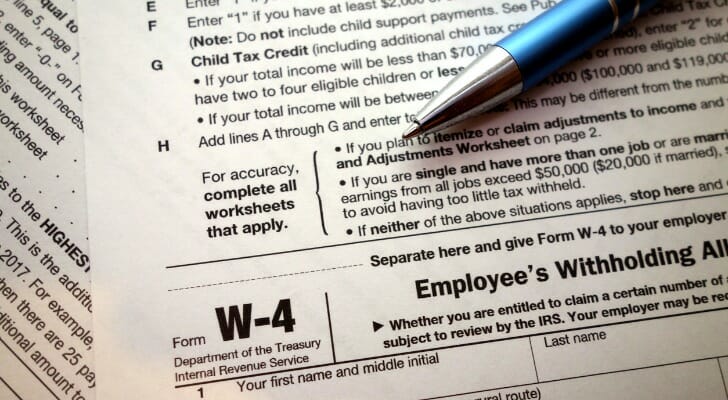
If you’ve ever taken a look at your pay stubs you’ve probably noticed your employer’s tax withholding. Based on the W-4 form that you submit when you start a new job or your tax situation changes, your employer will withhold federal and state (if applicable) income taxes from your pay. But if you start a job half-way through the year, you might benefit from the part-year tax withholding method. Consider working with a financial advisor as you manage your taxes.
Check out our 401(k) calculator.
What Is Part-Year Tax Withholding?
Say you start a new job part-way through the year or you only work for a few months out of the year. Maybe you’re doing a summer job while in grad school, for example. If your employer uses the normal method for withholding income taxes from your paychecks, he or she will withhold more money than is needed to cover what you owe.
The part-year method solves for that problem by adjusting employers’ withholding to account for the part-year nature of your employment. It takes the amount the employee will be making for part of the year, assumes those earnings were spread throughout the year and withholds on that basis. In other words, the part-year method gives a more accurate picture of your real tax liability.
Say you have a summer contract job that will pay you $12,000 for three months of work. Normal withholding would assume that your rate of pay for the whole year was $4,000 per month ($12,000/3 months). That would lead to a lot of withholding each pay period. But if your employer agrees to use the part-year method, he or she will instead operate as if that $12,000 were your pay for the whole 12-month year, with a pay rate of $1,000 per month – and withhold accordingly. As you can see, the latter method will leave you with bigger net paychecks.
Related Article: How Many Allowances Should You Claim?
Should You Request Part-Year Tax Withholding?
If an employer agrees to use this method of computing your withholding, less money will come out of each of your paychecks. That means you’ll have more take-home pay, but you won’t get the fat refund you would get if you let the over-withholding stand. The choice is yours. Most finance experts would say that over-withholding is bad because it’s like giving an interest-free loan to the government. But some Americans would prefer to get a big refund, even if it means that too much is withheld from their earnings each pay period.
If you’ve been out of work for part of the year and are just starting a job, or are starting a new job with a much higher salary, you might want to consider requesting that your employer use the part-year method. The same goes for those with summer jobs or temporary work.
The IRS requires that employees requesting their employer use the part-year method make the request in writing and include the following information in their written request: 1) The date of your last day of work for any prior employer in the current calendar year 2) A statement that you do not expect to be employed for more than 245 days during the current calendar year 3) A statement that you agree to use the calendar year as your tax year (as opposed to using the fiscal year as your tax year).
How to Request the Part-Year Method
To use the part-year withholding method, you must make a written request to your employer. The IRS requires that the request include three statements: the date you last worked for any prior employer during the calendar year, confirmation that you do not expect to work more than 245 days in the current year, and an agreement to use the calendar year for tax purposes.
This request should be submitted early in your employment so payroll can make the adjustment. Once accepted, your employer will calculate withholding as if your income were spread across the full year rather than compressed into a few months. That adjustment generally reduces the tax withheld from each paycheck, raising your take-home pay during the period you are employed.
Employers are not always familiar with this method, so it may be useful to cite the IRS instructions when you submit your request. Payroll departments can then apply the adjustment with confidence that it follows IRS guidance. The method is optional for employers, but if they agree, it can better align your withholding with your actual annual income.
The part-year method is often relevant for employees who work only part of the year, such as those in seasonal roles, short-term positions, or people who start a new job late in the year or return to work after a break. By filing the written request, you adjust withholding so it aligns more closely with your expected tax liability for the months you are employed, which may help prevent significant overwithholding during a short work period.
Bottom Line
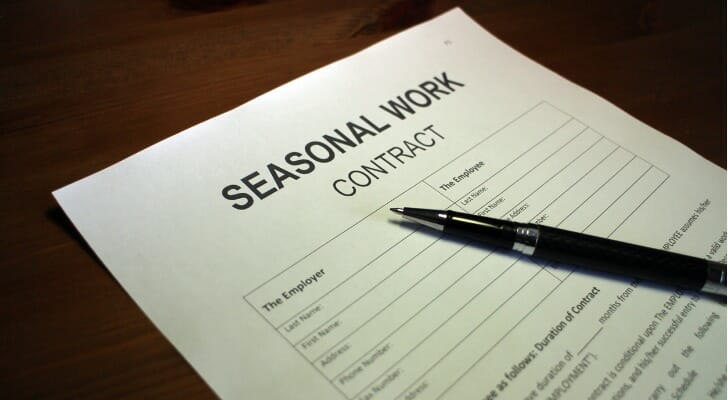
The part-year tax withholding method is a little-known trick that can help you keep more money in your pocket when you’re only working for part of the year. Before you submit a written request that your employer use the part-year method, double check that you meet the IRS requirements.
Tips on Taxes
- Sorting through all your options when it comes to paying taxes can be challenging, and it would be easy to make mistakes. That’s where the insight and guidance of a financial advisor can be quite valuable. Finding a financial advisor doesn’t have to be hard. SmartAsset’s free tool matches you with vetted financial advisors who serve your area, and you can have a free introductory call with your advisor matches to decide which one you feel is right for you. If you’re ready to find an advisor who can help you achieve your financial goals, get started now.
- Use our free tax calculator to get a quick estimate of what you will owe the federal government.
Photo credit: ©iStock.com/Andrii Dodonov, ©iStock.com/Piotrekswat, ©iStock.com/Hailshadow